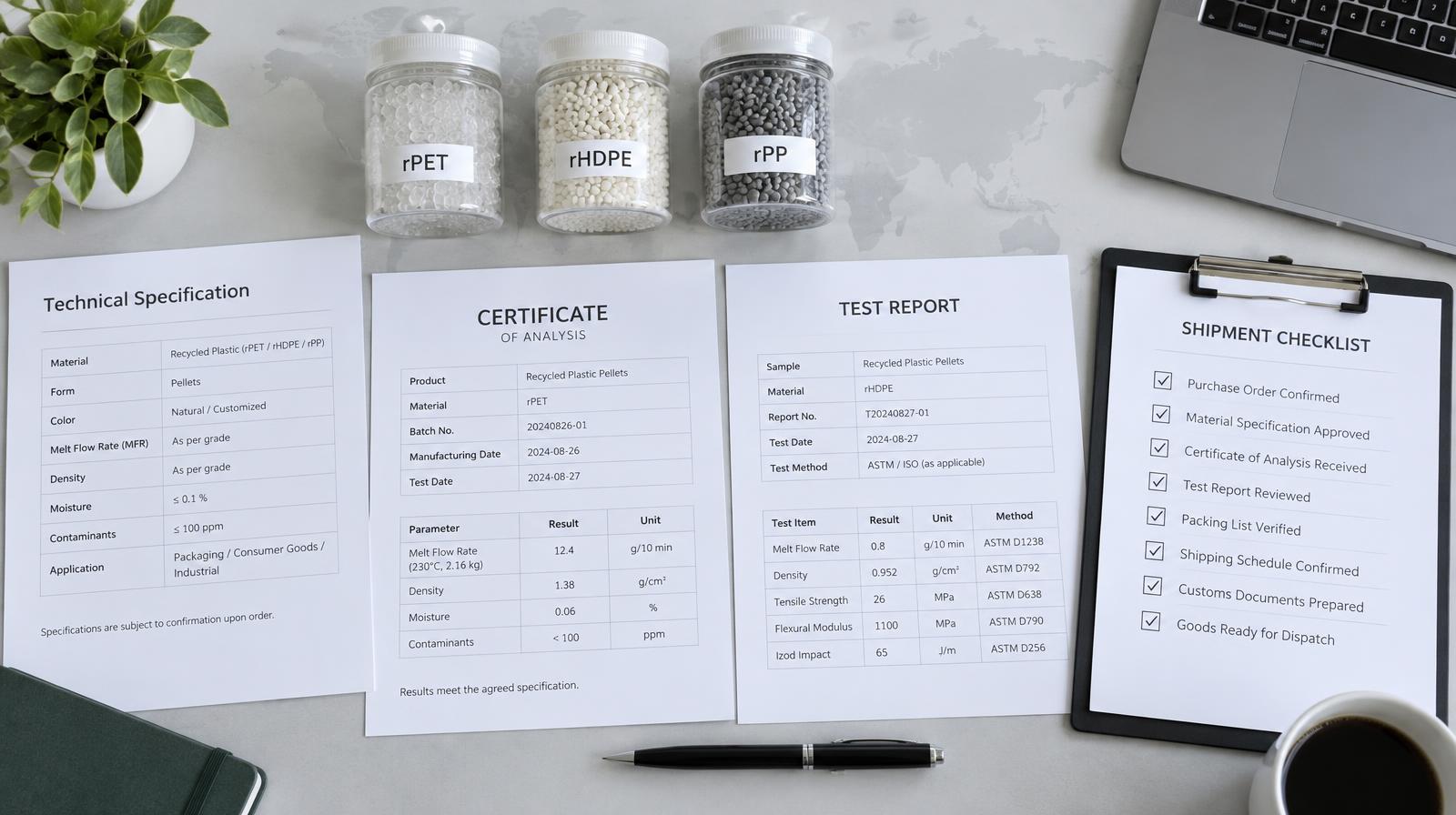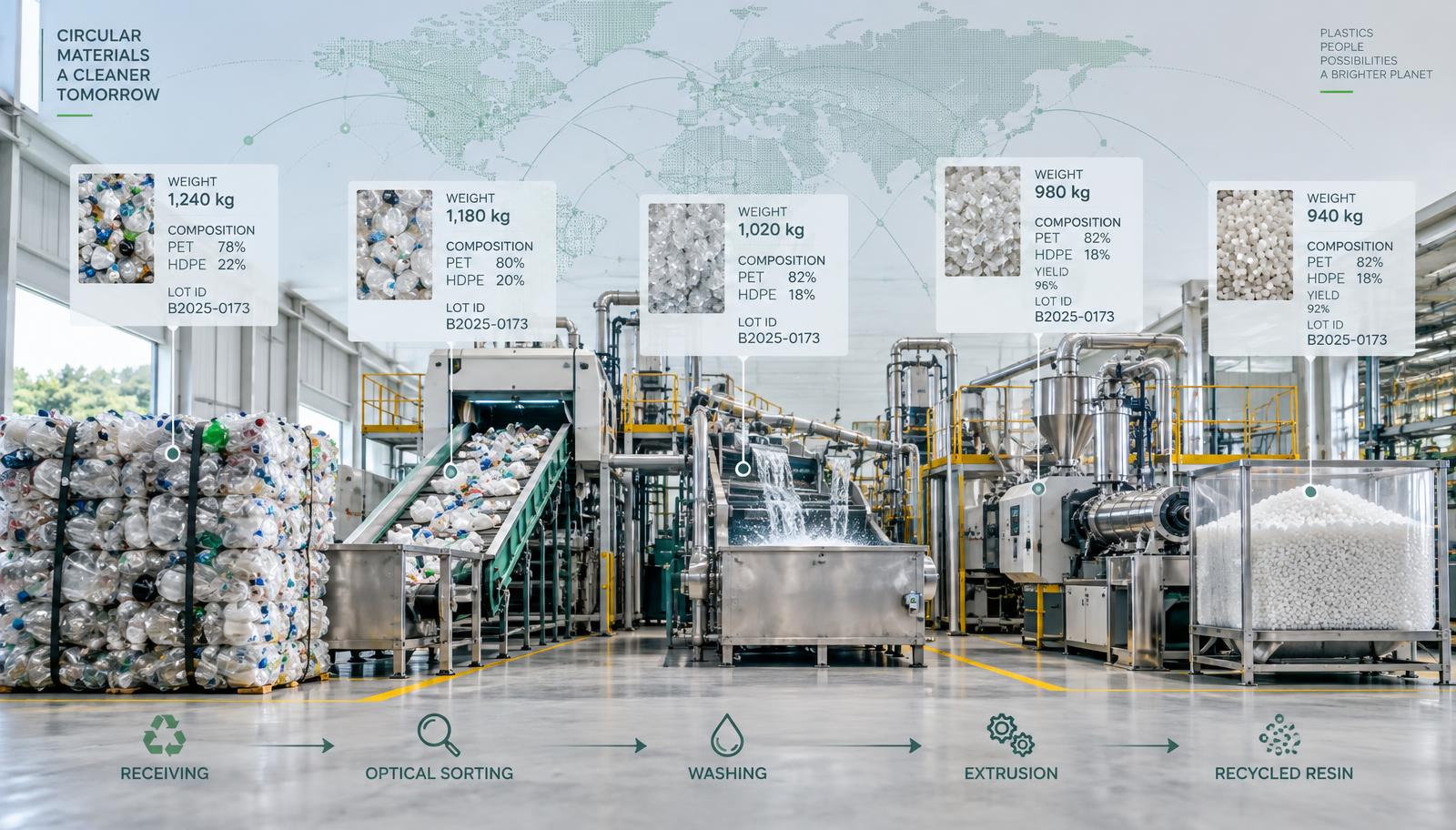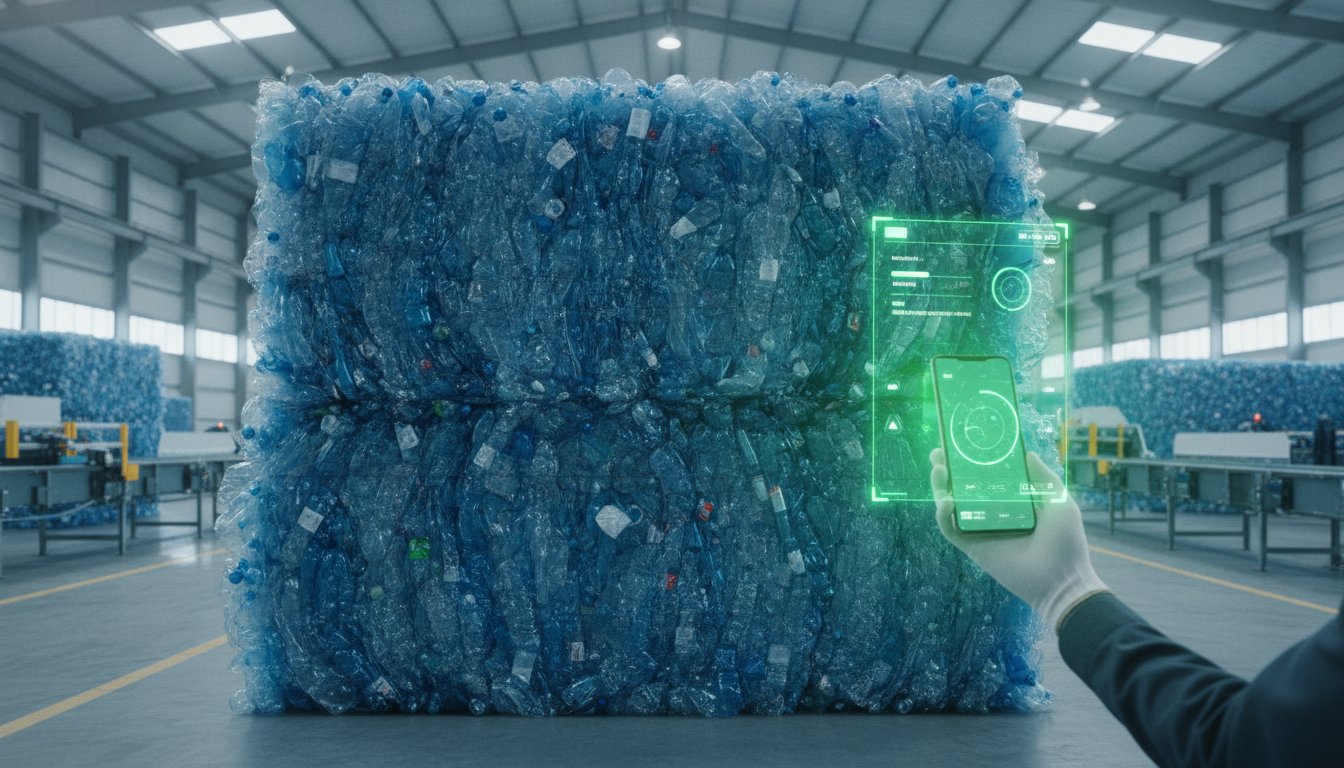
How much revenue is your facility losing to contamination that you don't even see until a buyer rejects the load? In 2026, relying on manual clipboards to track plastic bale composition data isn't just slow; it's a financial risk. With the EU Packaging and Packaging Waste Regulation (PPWR) now in effect and California's SB 343 enforcement starting this October, the margin for error has disappeared. You're likely tired of inaccurate audit data and the endless paperwork required to prove your material quality to skeptical buyers.
We understand the frustration of managing high-volume operations with low-visibility tools. This guide shows you how to transform manual bale audits into a streamlined digital data pipeline. You'll learn to increase purity levels and enforce supplier accountability without adding hours to your shift. We'll preview how automation leads to better pricing based on verified facts and show you the path to real-time visibility. Stop guessing what's in your bales and start using data to drive your operations forward.
Key Takeaways
- Replace manual paper logs with cloud-based databases to stay ahead of 2026 compliance requirements.
- Identify resins like PET and HDPE with high precision to reduce bale rejects and increase purity.
- Use photo-verified audits to hold suppliers accountable and automate the quality feedback loop.
- Capture plastic bale composition data through simple smartphone scans to build a searchable digital history.
- Leverage AI-driven waste characterization to turn visual evidence into actionable operational intelligence.
What is Plastic Waste Data Management in 2026?
Digital waste data management is the systematic tracking of material quality throughout the recovery cycle. It moves beyond simple weight logs to capture the specific DNA of your inventory. In a circular economy, this information is the currency that determines value. You need to know exactly what you're processing to meet the strict purity standards of 2026. This process involves capturing detailed plastic bale composition data, including polymer types, moisture levels, and supplier origin, then storing it in a centralized cloud database.
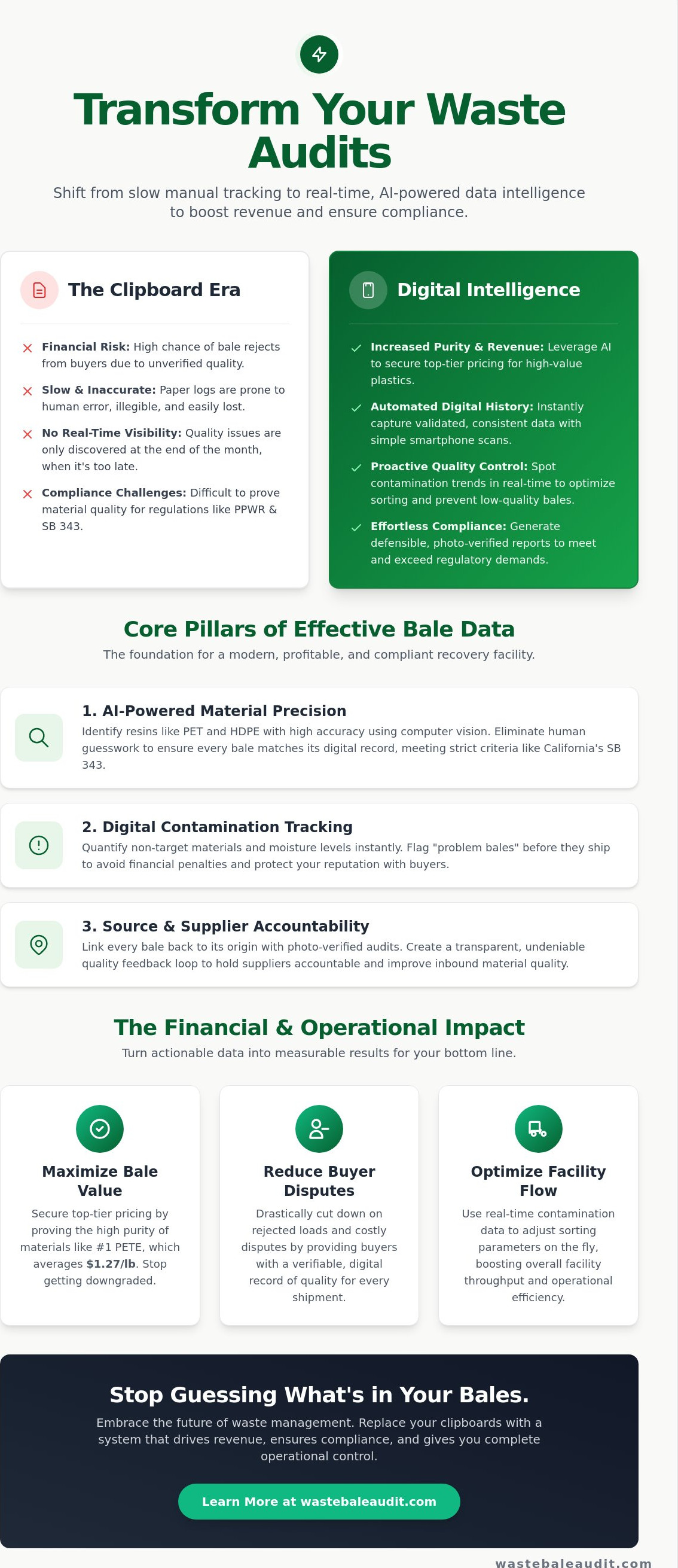
Data visibility is the foundation of any modern material recovery facility. Without it, you're guessing at your margins. Accurate data allows you to optimize the plastic recycling process by identifying exactly where contamination enters the stream. Effective management focuses on three core pillars: precise resin identification (PET, HDPE, PP), quantifying non-target materials, and linking every bale back to its source. This creates a transparent record that protects your facility from buyer disputes and regulatory fines.
The Shift from Manual Logs to Digital Intelligence
Relying on a clipboard and pen is a major operational risk. Paper logs are often illegible, easily lost, and prone to human error. If a floor worker miscounts a contaminant or mislabels a resin type, that mistake stays hidden until it's too late. Digital logs eliminate these gaps by standardizing how information is captured. When your team uses a digital interface, the data is validated instantly. This ensures that your plastic bale composition data remains consistent across every shift. Instant access to these records allows managers to spot quality trends in minutes rather than waiting for end-of-month reports.
Why Real-Time Data is the New Industry Standard
Plastic markets move fast. Prices for #1 PETE and HDPE fluctuate based on regional demand and new legislation like California's SB 54. You can't manage what you can't see in real time. Digital transparency builds immediate trust with buyers because you can provide verified proof of quality before the truck even leaves your yard. Real-time monitoring also boosts facility throughput. When you see a spike in contamination on a specific line, you can adjust your sorting parameters immediately. This proactive approach prevents low-quality bales from ever reaching the warehouse, saving time and protecting your reputation in a competitive market.
The Core Pillars of Effective Bale Composition Data
National averages provide a bird’s-eye view of the industry, but they don't help you manage today’s intake. To maximize revenue in a market where #1 PETE scrap averages $1.27/lb, you need granular control over your specific inventory. Effective data management relies on four core pillars: material precision, contamination tracking, temporal analysis, and standardized reporting. When these pillars are digitized, your facility moves from reactive sorting to proactive quality control.
Accuracy is the first requirement for any digital system. Distinguishing between clear PET and certain thermoforms or distinguishing HDPE from other rigids is difficult under warehouse lighting. Manual audits often miss these nuances, leading to downgraded loads. This precision ensures your plastic bale composition data is accurate enough to secure top-tier pricing. By identifying resins with high precision, you eliminate the "guesswork" that typically leads to buyer disputes.
Accuracy in Material Identification
Manual identification is slow and prone to fatigue. Floor workers might overlook non-target resins in a fast-moving environment. AI computer vision changes this by identifying resin types from visual cues that the human eye might ignore. This technology provides consistent grading for high-value PET and HDPE bales. It ensures that every bale leaving your facility matches its digital twin in your database. This level of detail is essential for meeting the strict recyclability criteria enforced by laws like California's SB 343.
Tracking Contamination Levels Digitally
Contamination is a direct drain on your bottom line. The difference between a 5% and 10% contamination rate isn't just a quality issue; it's a significant financial loss when you calculate the "invisible" costs of hauling and processing waste. Digital tools allow you to flag "problem bales" before they ship, protecting your reputation with buyers. You can use EPA plastic waste data to understand broader material trends, but your facility needs its own digital baseline. By aligning your digital audits with Association of Plastic Recyclers (APR) guidelines, you create a defensible record of quality.
Quality isn't static. It shifts with seasons, changes in municipal collection programs, and even internal shift rotations. Tracking your plastic bale composition data over time reveals these hidden patterns. Standardizing this information into digital formats makes internal and external reporting seamless. It replaces vague descriptions with hard evidence that buyers can trust. If you want to see how these pillars work in practice, you can start auditing your bales digitally to improve your facility's visibility immediately.
Leveraging Data for Supplier Accountability and Revenue
Data management shouldn't be a passive record-keeping task. It's your most powerful tool for protecting facility margins. When you capture detailed plastic bale composition data, you gain the evidence needed to hold suppliers to their quality promises. Inaccurate claims about bale purity often lead to expensive rejects at the buyer's gate. By verifying every load upon arrival, you stop the financial leak before it spreads through your facility. This proactive verification ensures you only pay for the material quality you actually receive.
Automating the feedback loop is the fastest way to improve incoming quality. Instead of manual phone calls or emails, you can send automated composition reports directly to your suppliers. These reports provide objective proof of contamination or resin mismatches. This transparency encourages suppliers to clean up their streams before the next shipment. Industry data shows that AI-enabled systems have demonstrated a 60% increase in efficiency, largely by reducing the time spent on these manual quality disputes and paperwork.
Using Photo-Based Audits to Verify Quality
Traditional audits require breaking open bales for manual sorting. This is labor-intensive, dangerous, and often skipped due to time constraints. A photo-first approach allows your team to verify quality in seconds. Taking a single image can trigger a comprehensive audit that identifies resin types and contamination levels instantly. This method provides a visual receipt that is impossible to argue with. For a deeper look at how this technology works, check out this plastic scrap inspection app guide. It explains how visual evidence becomes the backbone of your quality control process.
Turning Data into Negotiating Power
Purity is the primary driver of scrap value. There's a massive difference in market value between a bale with an "estimated" 95% purity and one with a "verified" 99% purity. Buyers pay a premium when you provide hard facts instead of guesses. You can use your historical plastic bale composition data to benchmark supplier performance over months or years. This historical context gives you the upper hand during contract renewals. If a supplier consistently delivers high-purity material, you can justify better rates. Conversely, you have the digital evidence to demand discounts for contaminated loads without the friction of a long, drawn-out dispute.
Implementing a Digital Waste Characterization Pipeline
Implementing a digital pipeline isn't about buying expensive hardware. It’s about standardizing how your team captures and shares information. You start by replacing clipboards with smartphone scans. This simple change ensures that every piece of plastic bale composition data is recorded the same way, every time. Once captured, this data moves automatically into a searchable cloud history. Centralization removes the "data silos" that happen when information is trapped in individual notebooks or local files. It makes your operations transparent and your records indestructible.
Many facilities still rely on Excel to manage their quality records. Spreadsheets fail because they aren't built for high-volume visual data. You can't easily search through thousands of rows to find a specific photo of a contaminated PET bale. A searchable history allows you to retrieve past scans in seconds. This is critical when a buyer questions a load from three weeks ago. You don't have to dig through filing cabinets; you just search the bale ID. Managing this at scale requires software built for collaboration. You can learn more about plastic bale quality control for teams to see how multiple users can contribute to a single database without creating duplicate entries.
Automated PDF Reporting for Compliance
Manual report writing is a drain on operational resources. It’s slow and takes your best people away from the floor. Automated reporting is the key to scaling MRF audits. A professional bale audit PDF should include the bale ID, resin breakdown, contamination percentages, and a clear photo of the material. Generating these summaries automatically for every bale ensures you're always ready for a compliance check or a buyer request. This consistency builds a professional image for your facility and reduces the time spent on administrative tasks by hours each week.
Distributing these insights is just as important as capturing them. Your floor supervisors need to see the data to adjust sorting lines. Your sales team needs it to justify pricing to buyers. Finally, review your analytics monthly to identify facility bottlenecks. If one line consistently produces higher contamination, the data will show you exactly where to focus your maintenance or training efforts. This five-step pipeline turns raw information into a strategic asset. To get started on building your own pipeline, explore our digital audit tools today and see the difference real-time visibility makes.
BaleScan: Your Digital Ally in Waste Data Management
BaleScan is the pragmatic solution for facilities facing the regulatory pressures of 2026. It bridges the gap between the physical reality of your floor and the digital requirements of your buyers. You don't need a lab or expensive hardware to get professional results. BaleScan turns your existing mobile devices into powerful auditing tools. It’s designed to fit into your current workflow without causing delays. Your facility generates massive amounts of plastic bale composition data every day; BaleScan ensures that information is captured, verified, and ready for use.
The core of the platform is visibility. It replaces the "best guess" with hard evidence. By centralizing your audits, you create a single source of truth for your entire operation. This transparency protects your margins and builds a reputation for quality that buyers can rely on. Whether you're managing a single site or a regional network, this tool provides the digital infrastructure needed to compete in a high-purity market.
Instant Insights with AI-Powered Scanning
The scanning process is built for speed. You use a "point-and-shoot" method that takes seconds. The AI is trained specifically for plastic waste environments, meaning it recognizes the difference between clear PET, labels, and various contaminants even in warehouse lighting. You get a full breakdown of your plastic bale composition data immediately. This instant feedback allows floor managers to make split-second decisions about material flow. You don't have to wait for a manual sort or a lab report. You get the results you need while the bale is still on the forklift.
Streamlining Team Operations
Managing high volumes requires a coordinated effort. BaleScan allows multiple users to contribute to a single facility database simultaneously. This eliminates the confusion of separate logs and ensures everyone is working from the same data. Depending on your facility size, you can choose the plan that fits your scale:
- Pro Plan: Ideal for single-user operations or facilities focusing on specific high-value lines.
- Team Plan: Designed for full-scale MRFs where multiple auditors need to capture and share data across shifts.
Both plans provide the searchable history required for long-term facility audits. This history is your defense during buyer disputes or regulatory inspections. It proves your commitment to purity and provides the data needed to justify your pricing. It’s time to move beyond manual paperwork and embrace a system that works as hard as your team does. You can start managing your bale data with BaleScan today to secure your facility's future in the circular economy.
Secure Your Facility’s Future with Digital Intelligence
The transition to a digital waste characterization pipeline is no longer optional. As regulations tighten and buyers demand higher purity, your ability to provide verified plastic bale composition data becomes your strongest competitive advantage. You've seen how digital tools eliminate the risks of manual audits while building a transparent history that protects your bottom line. By centralizing your records and automating feedback, you turn operational challenges into a streamlined revenue engine.
BaleScan provides the instant PDF report generation and searchable history needed to stay ahead of the curve. It's a pragmatic tool already used by MRFs and traders worldwide to scale their quality control without adding headcount. It’s time to stop guessing and start measuring with precision. You can gain total visibility into your inventory while reducing the stress of manual paperwork and buyer disputes.
Analyze your first 10 bales for free with BaleScan
Your facility is ready for the next level of operational efficiency. Take the first step toward a more profitable, data-driven recovery process today.
Frequently Asked Questions
What is plastic waste data management?
Plastic waste data management is the digital process of tracking material quality and resin types throughout the recovery cycle. It replaces traditional paper logs with cloud-based databases to ensure accuracy and regulatory compliance. This system allows facilities to monitor inventory DNA, including contamination levels and supplier origin, providing the transparency needed for the 2026 circular economy.
How does AI help in managing bale composition data?
AI uses computer vision to analyze photos and identify specific polymers like PET, HDPE, and PP. It automatically quantifies contamination from labels, moisture, and non-target resins to generate plastic bale composition data in seconds. This automation eliminates the need for labor-intensive manual sorting while providing a consistent, photo-verified record for every bale in your inventory.
Can I track plastic bale history on my smartphone?
Yes, you can manage your entire audit history through mobile-optimized platforms. Floor managers use smartphones to capture scans and instantly access a searchable database of past audits. This mobility ensures that quality data is available wherever you are in the facility, allowing for immediate verification of loads during loading or unloading operations.
Is digital waste characterization more accurate than manual audits?
Digital characterization significantly reduces the human error and fatigue common in manual sorting. While manual audits are often inconsistent or skipped due to time constraints, digital tools apply the same rigorous standards to every scan. This creates a more reliable dataset that buyers trust, helping you avoid the expensive rejects that result from inaccurate manual grading.
How do I generate a professional bale audit report?
You can generate professional reports by using software that automatically converts scan data into PDF summaries. These reports include essential details like bale IDs, resin percentages, and visual evidence. Automated reporting saves hours of administrative work and provides your sales team with the verified facts needed to negotiate better pricing with material buyers.
What are the benefits of using a SaaS platform for MRF operations?
SaaS platforms provide centralized data access and real-time visibility without requiring expensive on-site hardware installations. They allow your entire team to contribute to a single source of truth for plastic bale composition data. This connectivity improves coordination between shifts and ensures that your facility stays compliant with evolving state and international recycling regulations.
How much does AI bale scanning software cost?
Costs for scanning software vary based on your facility's volume and the number of team members who need access. Most facilities choose between a Pro Plan for focused operations or a Team Plan for high-volume environments requiring multi-user collaboration. These options allow you to scale your digital auditing capabilities as your facility grows and your data needs become more complex.
Can I share bale composition data directly with my suppliers?
Yes, sharing digital reports with suppliers is an effective way to enforce quality standards and settle disputes. Automated feedback loops allow you to send objective proof of contamination or resin mismatches immediately upon inspection. This transparency holds suppliers accountable for the material they deliver and helps improve the overall quality of your incoming waste streams.