Would you bet your quarterly margins on a handwritten clipboard and a quick visual glance? With the average price of plastic scrap reaching $1.48 per pound in June 2026, the cost of error has never been higher. Relying on manual checks often leads to expensive surprises, especially with #4 LDPE currently trading at $2.05 per pound. A modern plastic scrap inspection app changes this dynamic by putting laboratory-grade verification in your pocket.
It's frustrating to lose revenue because of hidden contamination or a lack of digital proof during a supplier dispute. You need a way to verify bale quality without slowing down your operations. This guide explains how AI-powered mobile apps replace outdated manual processes to identify resin types like PET and HDPE instantly. You'll discover how to generate professional PDF reports and maintain a searchable digital history of every audit. Learn how to protect your business as the industry shifts toward stricter EU documentation requirements and digital traceability.
Key Takeaways
- Understand why even 5% contamination can ruin an entire batch and how digital tools prevent these costly intake errors.
- Learn how computer vision identifies resin types like PET, HDPE, and PP directly from your smartphone camera.
- Standardise how intake observations are captured and documented by using a dedicated plastic scrap inspection app.
- Follow a streamlined two-step workflow to capture high-quality bale data and verify material composition on-site.
- Utilize Pro Plan features to generate instant PDF reports and maintain a searchable digital history for resolving supplier disputes.
The Shift to Digital: Why Manual Plastic Scrap Inspection is Failing
Traditional bale auditing is a high-stakes guessing game. For decades, facility managers have relied on manual clipboards and quick visual checks to verify incoming loads. This approach is no longer sustainable in a market that demands precision. A modern plastic scrap inspection app is an AI-driven tool that provides objective material verification in seconds. It shifts the focus from simple price-tracking to deep composition analysis, giving buyers the data they need to protect their margins.
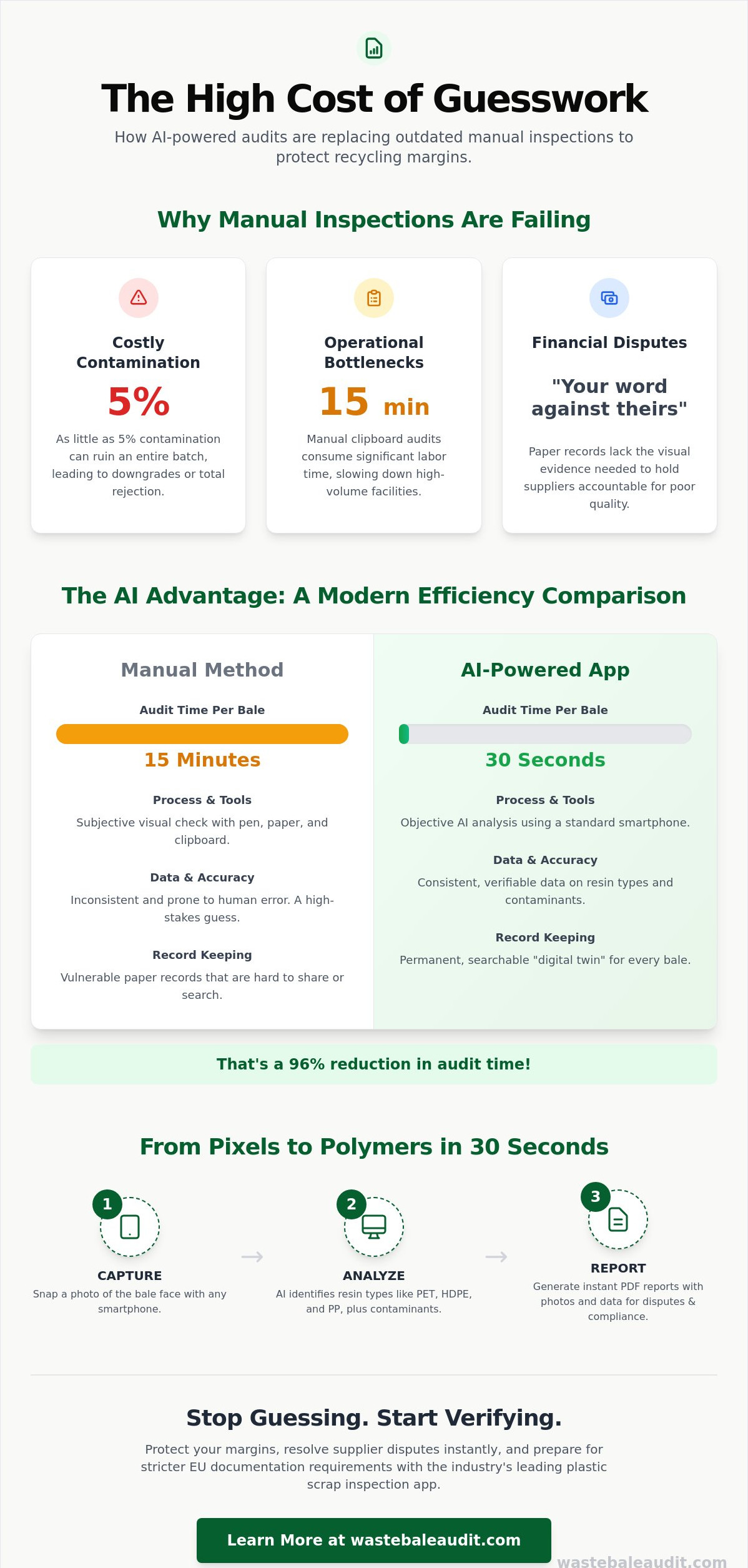
Manual errors carry a heavy price tag. Industry experts recognize that as little as 5% contamination can ruin an entire batch. This leads to costly downgrades or outright rejections at the plant. Relying on human eyes to catch every strand of PVC in a PET load is unrealistic and risky. In fast-paced Material Recovery Facility (MRF) environments, paper-based reporting creates a massive operational bottleneck. It delays data entry and leaves the facility vulnerable to quality disputes because there is no permanent, shareable record of the inspection.
The Hidden Costs of Traditional Bale Audits
Manual sorting and documentation consume significant labor hours. When an inspector spends 15 minutes per bale with a pen and paper, they're losing valuable operational time. The real damage happens during the settlement process. If a load is rejected by an end-processor due to unexpected contamination, the facility loses the sale and often pays for the return freight. These financial hits are difficult to contest because traditional audits lack the visual evidence needed to hold suppliers accountable. Without a digital record, it's your word against theirs.
How Mobile Technology Bridges the Quality Gap
Mobile technology solves these problems by capturing data at the point of receipt. This ensures that every load is checked against the same objective standards regardless of who is performing the audit. Accurate sorting and verification are critical components of plastic recycling, and digital tools make this process repeatable and transparent. By using a plastic scrap inspection app, you create a digital twin for every bale. This record includes a detailed breakdown of resin types like PET and HDPE, along with high-resolution photos. This level of visibility builds trust with buyers and provides the documentation necessary to resolve supplier quality issues immediately.
How AI-Powered Apps Analyze Plastic Bale Composition
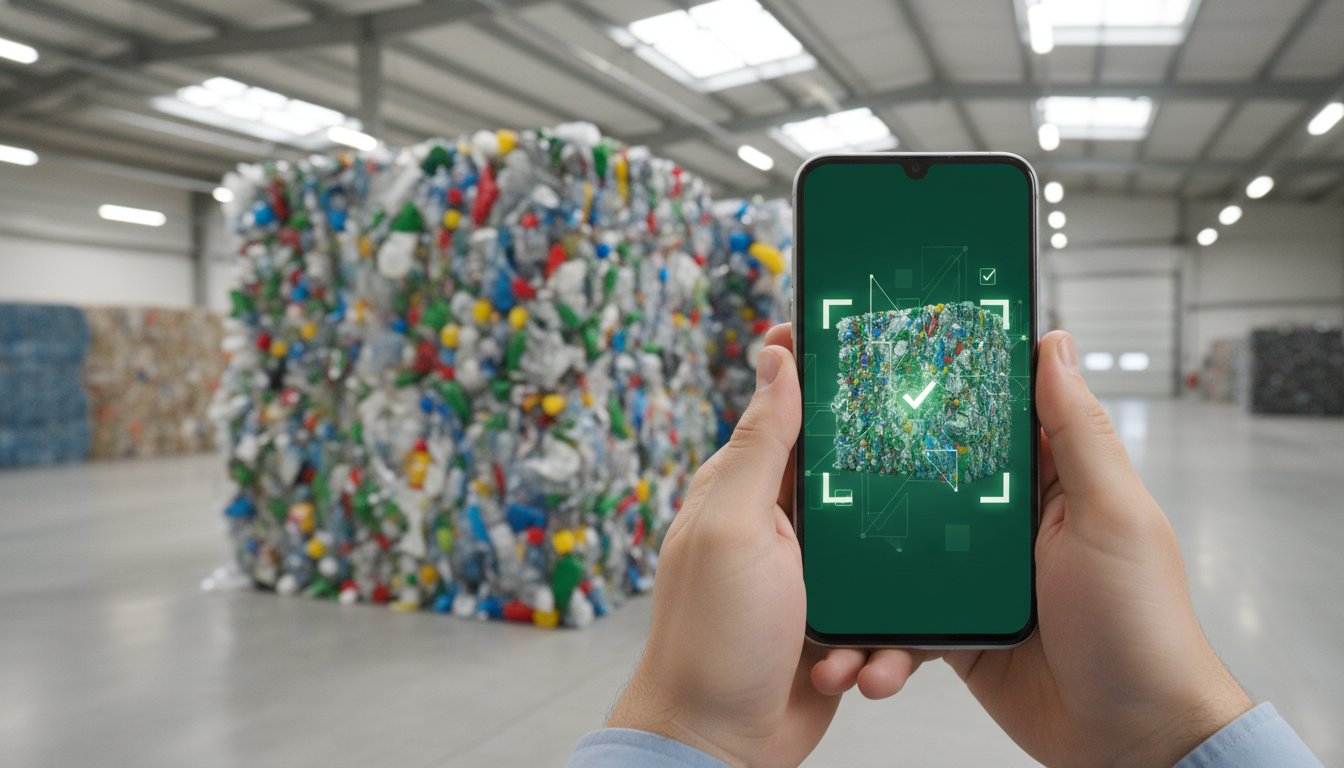
Computer vision turns a standard smartphone camera into a high-precision diagnostic tool. Instead of relying on a subjective estimate, a plastic scrap inspection app uses neural networks to analyze every visible square inch of a bale. It recognizes patterns that the human eye might overlook during a busy shift. This process starts with a simple photo and ends with a verifiable breakdown of resin types and contaminants. It provides the objective data required to make informed purchasing decisions on the spot.
The speed of this analysis is a game-changer for high-volume facilities. You can move from a raw photo to a comprehensive composition report in under 30 seconds. This rapid turnaround is essential when trucks are waiting and material is moving fast. By using advanced techniques that incorporate artificial intelligence, these apps categorize polymers like PET, HDPE, and PP with remarkable consistency. They identify labels, textures, and even the specific shapes of crushed containers to determine what's inside the bale. For professional teams, using a reliable inspection tool ensures that every load meets the necessary quality standards before it enters the production line.
From Pixels to Polymers: The Role of Computer Vision
Visual composition analysis is the automated breakdown of material types via image processing. The AI doesn't just look for colors; it identifies the unique visual signatures of different plastics. It recognizes the specific way #1 PETE reflects light compared to #2 HDPE. It also analyzes the density and arrangement of materials within the bale face. These models are trained on massive datasets of scrap images, allowing them to account for dirt, moisture, and varying light conditions. This level of detail ensures that your audit reflects reality rather than an optimistic guess.
Identifying Contamination Before it Reaches the Line
Contamination is the primary threat to recycling profitability. A single bale with high levels of metal, wood, or paper can damage equipment or degrade a whole batch of recycled resin. The app identifies these non-plastic materials instantly. It can even differentiate between clear PET and problematic PET-G, which often looks identical to the untrained eye. Users can set custom contamination thresholds within the app. If the AI detects a percentage of "out-throw" material that exceeds your limit, it flags the bale immediately. This allows you to reject the load or renegotiate the price based on objective metrics rather than intuition.
Manual Audits vs. AI Apps: A Modern Efficiency Comparison
Manual auditing is a slow, error-prone process that drains facility resources. It typically takes an experienced inspector 15 minutes to properly document a single bale using paper forms. By contrast, a plastic scrap inspection app completes the same task in just 30 seconds. This massive difference in speed allows your team to process more loads without increasing headcount. Digital auditing replaces subjective human guesswork with objective AI metrics, ensuring every material assessment is based on hard data rather than an "experienced eye."
Reporting speed is another critical differentiator. Manual filing requires physical storage and manual data entry into spreadsheets, which often leads to transcription errors. An AI app generates a professional PDF report the moment the scan is finished. This instant documentation creates immediate supplier accountability. You no longer have to rely on verbal claims or memory during a dispute. You have photo-backed evidence of contamination levels that you can share with suppliers in real-time. This shifts the power back to the buyer by providing undeniable proof of material quality.
Quantifying the ROI of Digital Inspection
Switching to digital tools provides a clear path to improved profitability. You reduce labor costs by automating the most time-consuming parts of quality control. Staff can focus on moving material rather than filling out forms. Better upstream verification also leads to a decrease in downgraded loads. When you identify poor quality material before it hits the processing line, you protect your equipment and improve overall throughput. Preventing a single contaminated batch from entering your system can save thousands of dollars in lost production time and potential machinery damage.
Eliminating Human Bias in Quality Grading
Human inspectors are susceptible to "friendly grading." This happens when staff overlook minor contamination from long-term suppliers to maintain relationships. AI doesn't have these biases. It applies the same rigorous standards to every bale, 24/7, regardless of the supplier or the shift. This consistency standardizes quality across your entire operation. It also creates a transparent audit trail that simplifies third-party compliance. Every scan is logged with a timestamp and visual proof, making it easy to demonstrate your commitment to quality during external audits. Using a plastic scrap inspection app ensures that your data remains honest and your standards stay high.
Implementing a Digital Workflow for Supplier Quality Control
Integrating a plastic scrap inspection app into your daily operations doesn't require a total overhaul of your facility. It's about replacing the slowest part of your intake process with a faster, digital alternative. A structured workflow ensures that every inspector follows the same protocol. This consistency is what allows you to move from reactive firefighting to proactive quality management. When your team follows a repeatable digital process, you eliminate the variability that comes with manual checks. It turns every smartphone into a powerful tool for maintaining material standards.
The implementation follows a logical four-step cycle that fits into any fast-paced warehouse environment. First, the inspector captures high-quality photos of the bale face and sides. Second, they review the AI-generated composition breakdown on-site. This immediate feedback allows for instant decisions while the truck is still at the dock. Third, the app generates a professional PDF report that can be shared with the supplier via email or text. Finally, the data is archived in a cloud-based system. This digital record lets you track supplier performance over months or years, giving you a clear view of who provides the best material.
Best Practices for On-Site Bale Photography
Image quality directly impacts the accuracy of your AI analysis. You don't need a professional camera, but you do need to follow a few simple rules. Ensure the bale is well-lit and avoid shooting directly into bright light sources. Position the camera perpendicular to the bale face to get a clear view of the material layers. Capturing representative sections of both the face and sides helps the AI identify deep contamination that might be hidden from a single angle. Most apps include built-in guidance to ensure consistent photo quality across different team members. These visual cues help even new employees take laboratory-grade photos on their first day. Following these steps ensures your plastic scrap inspection app delivers the most accurate composition data possible.
Holding Suppliers Accountable with Data
Objective data is your most effective tool for price renegotiation. When a load contains more than the agreed-upon contamination, you have a photo-backed PDF report to justify a price adjustment or an outright rejection. This evidence removes the emotion from vendor disputes. You can even automate the notification process so suppliers receive a copy of the audit the moment it's completed. Over time, this data allows you to develop a "Supplier Scorecard." You'll see exactly which vendors consistently deliver clean PET and which ones are regular sources of contamination. To start building your digital audit history and improving vendor quality, view our Pro Plan and Team Plan options today.
BaleScan: The Industry-Leading Plastic Scrap Inspection App
BaleScan acts as your pragmatic ally in a high-speed recycling environment. It's the only plastic scrap inspection app built specifically to handle the physical reality of the bale yard while delivering the digital precision of a laboratory. You don't need to purchase or maintain expensive on-site bale scanning hardware. Instead, you leverage the powerful processor already in your pocket. This approach reduces your overhead and allows you to start auditing loads immediately. It's a tool built for professionals who value results over technical novelty.
The software is designed to scale with your business. Whether you're managing a single facility or a national network, the interface remains simple and direct. It eliminates the guesswork of material verification and replaces it with a steady stream of objective data. Every feature is focused on speed and visibility, ensuring your team spends less time on paperwork and more time on high-value operations. You gain total control over your inventory quality without adding friction to your workflow.
Unlimited Scans for Scalable Operations
The Pro Plan provides the high-volume capacity that modern facilities require. It offers unlimited scans, ensuring that every incoming load is verified without restriction. This plan is essential for operations that process hundreds of tons daily and need instant PDF generation for every load received. As a dedicated plastic scrap inspection app, BaleScan eliminates the need for expensive on-site hardware by using the camera technology you already own. You get professional results without the capital expenditure of traditional scanning systems. Every scan produces a detailed report that you can archive or send to suppliers instantly.
Collaborative Quality Control for Teams
For larger operations, the Team Plan centralizes data from multiple inspectors into one searchable dashboard. This visibility allows managers to set facility-wide standards for bale acceptance and rejection. It ensures that an inspector on the morning shift follows the same rigorous criteria as one on the night shift. You can monitor supplier performance across different sites and identify trends before they impact your bottom line. This level of transparency builds a culture of accountability and precision. It turns individual inspections into a powerful database of supplier history. Ready to modernize your intake process? Start your free trial of BaleScan and audit your first 10 bales today.
Modernize Your Quality Control Process
Manual clipboards are a liability in a market where contamination costs thousands in lost revenue. AI-powered composition analysis provides the objective data needed to verify every load in seconds. By adopting a modern plastic scrap inspection app, you replace subjective guesswork with instant PDF reports and a searchable audit history. This digital transition ensures your facility stays ahead of tightening regulations without the need for expensive on-site hardware.
Managing supplier quality becomes a streamlined task rather than an operational burden. You gain the ability to track performance over time and resolve disputes with visual proof. Whether you choose the Pro Plan for high-volume scanning or the Team Plan for facility-wide coordination, the result is the same: higher quality material and protected profit margins. It's time to stop guessing and start verifying. You can audit your first 10 bales for free with BaleScan to see the results in your own yard. Take control of your quality standards today and build a more profitable, data-driven recycling operation.
Frequently Asked Questions
How accurate is a plastic scrap inspection app compared to manual sorting?
AI-powered inspection is significantly more consistent than manual sorting because it removes human bias and fatigue. While a human might overlook a small percentage of PVC in a PET bale during a long shift, the app applies the same rigorous standards to every scan. This objectivity ensures that your quality grading remains stable across all incoming loads, providing a level of precision that manual checks can't match.
Do I need special hardware or sensors to use a bale inspection app?
You don't need any specialized hardware, sensors, or external scanners to use this plastic scrap inspection app. The software is designed to run directly on standard modern smartphones by leveraging their built-in high-resolution cameras. This eliminates the need for capital investment in expensive, bulky equipment and allows your team to start auditing immediately with the tools they already own.
What types of plastic can the AI currently identify in a bale?
The AI identifies the most common industrial polymers including PET, HDPE, LDPE, and PP. It also flags common contaminants like metal, wood, and paper that often find their way into scrap bales. By recognizing the specific visual signatures, textures, and labels of these materials, the app provides a detailed percentage breakdown of the bale's composition for every scan.
Can the app detect contamination that is hidden deep inside the bale?
The app analyzes the visible surfaces of the bale, including the face and sides, to estimate overall composition. While it doesn't see through solid objects like an X-ray, it identifies contamination patterns visible on the exterior that are highly representative of the bale's internal quality. Taking photos from multiple angles as recommended in the digital workflow helps improve the accuracy of these findings significantly.
How do I use the inspection reports to dispute a bad load with a supplier?
You can use the instant PDF reports as objective, photo-backed evidence during settlement discussions. These reports include a timestamp, high-resolution images of the contamination, and a calculated breakdown of the material types. Sharing this data immediately via email or text puts you in a stronger position to renegotiate pricing or reject a load based on hard facts rather than subjective opinions.
Is there a free version of a plastic scrap inspection app available for small traders?
While the Pro and Team plans are designed for ongoing commercial operations, you can test the technology before committing to a subscription. For example, you can audit your first 10 bales for free to evaluate how the plastic scrap inspection app fits your specific workflow. This allows small traders to see the value of digital auditing before selecting a professional plan that matches their monthly scan volume.
Can the app work in low-light conditions common in recycling warehouses?
The software performs well in typical warehouse environments, though extreme darkness can impact AI accuracy. Most modern smartphones automatically adjust for low-light conditions to capture clear images for processing. For the best results, we recommend ensuring the bale face is reasonably illuminated so the AI can accurately distinguish between different resin textures and labels without interference.
Does the software support multi-user teams for large MRF facilities?
Yes, the Team Plan is specifically built to support multi-user environments in large MRF facilities. It centralizes data from every inspector into a single, searchable dashboard. This allows management to monitor quality trends across different shifts and ensure that all staff members are adhering to the same facility-wide inspection standards, regardless of their location or experience level.