What if your facility's profitability didn't depend on the subjective eye of whoever happens to be on the loading dock today? Inconsistent grading between different staff members often leads to costly disputes and missed contamination. You likely feel the daily friction of manual paper audits and the lack of historical data needed to hold suppliers accountable. Scaling plastic bale quality control for teams is nearly impossible when every inspector uses a different mental yardstick for material purity.
It's time to move beyond the clipboard and the guesswork. Discover how to digitize your recycling facility’s quality control and empower your staff with AI-driven bale analysis software. This shift provides you with instant, standardized bale reports and facility-wide visibility on contamination levels. We will explore how these digital tools eliminate paper-based record keeping and help your operation stay compliant with the EU PPWR and California SB 54 regulations taking effect in 2026. This transition ensures your team is ready for the August 2026 enforcement dates while turning your quality data into a competitive advantage.
Key Takeaways
- Digital waste management software replaces inconsistent manual audits with standardized protocols that scale across high-volume facilities.
- Establish a single source of truth for plastic bale quality control for teams by implementing photo-capture protocols that every staff member can follow.
- Gain facility-wide visibility through centralized dashboards that allow managers to track scan history and contamination trends in real time.
- Learn how to identify critical audit points for inbound and outbound materials to ensure supplier accountability and buyer satisfaction.
- Transition to a Team Plan to empower multiple users with role-based permissions, providing a cost-efficient way to scale your quality control operations.
The Shift to Digital Waste Management Team Software
Waste management team software is a collaborative platform designed to unify quality control across your entire facility. It moves past fragmented spreadsheets and local files to create a shared digital space where every team member logs data and views results instantly. This connectivity is vital for the plastic recycling process, where material purity determines the final market value. In high-volume MRF environments, manual audits simply can't keep pace. Checking a fraction of your output with a pen and clipboard creates a massive data gap when you're processing hundreds of tons daily. You lose visibility and risk shipping contaminated bales that buyers will eventually reject. Digital monitoring replaces static paper specifications with active, real-time tracking. It puts the power of data directly into the hands of floor-level operators through mobile accessibility, ensuring that plastic bale quality control for teams is a constant, automated process rather than a sporadic chore.
Why Manual Inspections Are the Weakest Link
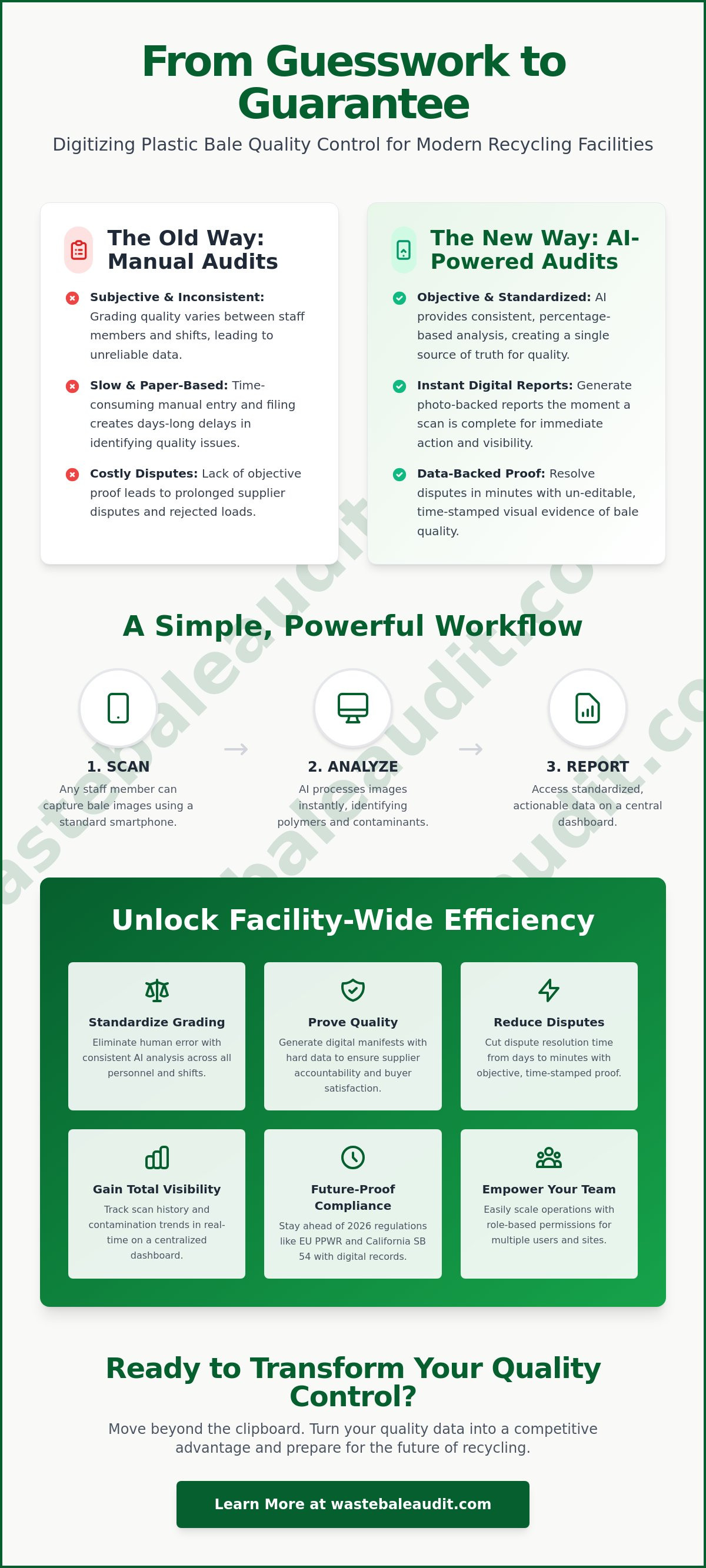
Subjectivity is the silent killer of bale quality. One inspector might see a 2% contamination rate as acceptable, while another flags it as a failure. This inconsistency makes plastic bale quality control for teams a moving target. Beyond the grading errors, there's the hidden administrative burden. Filing paper reports and manually entering data into a computer takes hours that your staff doesn't have. Slow reporting means you identify problems days after the bales have left the yard. By then, the financial loss is already locked in. Digital systems eliminate this lag by providing instant feedback the moment a scan is completed.
The Rise of AI-Powered Composition Analysis
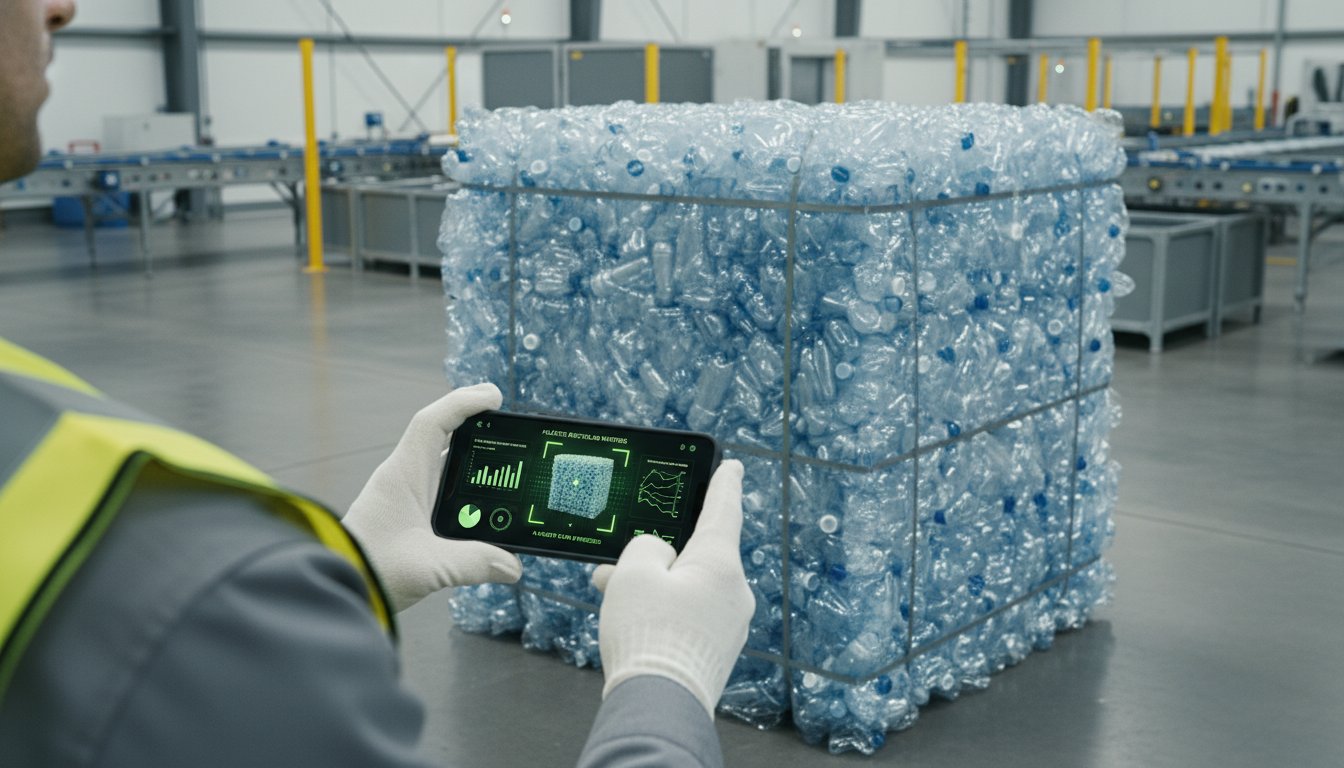
Modern facilities are moving beyond the naked eye. AI-powered software now identifies polymers and contamination levels instantly. This technology democratizes facility audits by turning any smartphone into a powerful scanning tool. You no longer need to invest in expensive, fixed sensor arrays that require constant maintenance and high upfront costs. Software-only solutions allow you to scale quality protocols across multiple loading docks or even different sites without a massive capital expenditure. It's about using the hardware your team already carries to get results that were previously impossible. This shift allows your facility to:
- Standardize grading across all shifts and personnel.
- Identify specific contaminants before they reach the buyer.
- Generate digital manifests that prove bale quality with hard data.
- Reduce dispute resolution time from days to minutes.
By moving to a digital-first approach, you aren't just changing how you record data. You're changing how your team interacts with the material, turning every person on the floor into a high-precision quality analyst.
Standardizing Plastic Bale Quality Control for Teams
Standardization is the foundation of any scalable operation. Without it, your data is just a collection of opinions. Establishing a single source of truth ensures that every member of your staff uses the same criteria for material grading. This eliminates the gut feeling that often leads to rejected loads or underpriced material. A standardized photo-capture protocol is the first step. By requiring specific angles and close-ups, you ensure that the AI has the best possible data to analyze. This process integrates directly into the daily loading and unloading workflow. It doesn't add time to the process. It adds certainty to the result. When you digitize your quality protocols, you create a transparent environment where everyone knows the expectations.
Implementing plastic bale quality control for teams requires a shift in how you view the loading dock. It's no longer just a transit point; it's a data collection hub. By removing the ambiguity of manual grading, you protect your facility from the financial risks of contamination. Third-party AI verification acts as an objective referee. It provides a neutral assessment that both you and your partners can trust. This level of clarity is vital for maintaining high throughput without sacrificing the quality of your outbound material. It ensures that every bale meets your facility's specific standards before it ever hits the scale.
Eliminating Grading Subjectivity
AI provides an objective, percentage-based contamination score that doesn't change based on who is holding the phone. Training your staff to use plastic scrap inspection apps ensures uniform results across every shift. You can set hard thresholds for bale rejection based on this digital data. If a load exceeds a specific contamination limit, the system flags it immediately. This precision is essential for meeting the strict requirements of 2026 regulations like California SB 343. It ensures your facility only processes material that meets your recovery standards while providing a clear audit trail for every decision made on the floor.
Real-Time Supplier Accountability
Disputes with suppliers often come down to a lack of evidence. Digital records change that dynamic. You can generate instant PDF reports to send to suppliers before their truck even leaves your facility. These reports include clear photo evidence of specific issues like PET-G contamination or excess moisture. Over time, these records build a historical performance database for every waste supplier. You can see exactly who provides the cleanest material and who consistently sends problematic loads. This data-driven approach simplifies plastic bale quality control for teams by providing the evidence needed for difficult negotiations. You have the data to back up every claim, which leads to stronger supplier relationships and higher material quality.
Core Features of Professional Team Audit Platforms
A professional platform transforms raw data into actionable intelligence. It moves beyond simple photo storage to provide a robust infrastructure that supports multiple users simultaneously. This is the engine that drives plastic bale quality control for teams, ensuring that every person in the facility has the tools they need to maintain high standards. From role-based permissions to cloud-based audit trails, these features are designed to eliminate the friction of traditional manual record keeping. They allow your facility to handle higher volumes without increasing administrative headcount.
Cloud-based storage is a non-negotiable requirement for modern operations. It creates a searchable, long-term archive of every bale that passes through your gates. If a buyer claims a load was contaminated six months after delivery, you can retrieve the timestamped photo evidence in seconds. This historical data is essential for defending your facility's reputation and holding suppliers accountable for the material they send. It turns your quality control process into a permanent digital asset that protects your bottom line.
Collaborative Dashboards and User Management
Visibility starts with a centralized dashboard. Managers can view facility-wide scan history in real time, regardless of how many loading docks are active. This high-level view allows you to identify trends, such as a sudden spike in moisture levels from a specific regional supplier. Multi-user access with role-based permissions ensures that floor staff can perform scans while managers handle the data analysis. Tracking which team member performed which audit creates a culture of internal accountability. It allows you to identify training gaps if certain inspectors consistently produce outliers in their grading. Managing user seats and facility-wide scan limits ensures your plastic bale quality control for teams remains cost-effective as your operation grows.
Reporting and Documentation Automation
The manual creation of audit reports is a significant drain on office resources. Professional platforms automate this entire workflow. A standard digital bale audit report includes high-resolution photos, AI-calculated composition percentages, timestamps, and GPS location data. These elements provide an indisputable record of material quality at the moment of inspection. Automating the 'Email to Supplier' process saves hours of labor every week. Instead of manually attaching photos to an email, the system generates a professional PDF and sends it instantly. This level of documentation is critical for compliance with the EU Packaging and Packaging Waste Regulation (PPWR) and California’s Extended Producer Responsibility (EPR) requirements taking effect in 2026. It ensures your facility is ready for mandatory digital reporting without adding to your team's daily workload.
Implementing a Digital Quality Protocol in Your Facility
Transitioning from manual logs to a digital system requires a clear roadmap. It is not enough to simply have the software; your team must know exactly how and when to use it. Implementing plastic bale quality control for teams starts with mapping your facility's physical material flow. You must identify the critical audit points where data capture provides the most protection. For most MRFs, this means a dual-gate approach. Inspecting inbound material ensures you hold suppliers to their specs. Auditing outbound bales guarantees that your final product meets buyer expectations and regulatory standards. You can begin this transition today by setting up a digital quality protocol that fits your specific layout.
Once your audit points are set, establish your digital hierarchy. Assign admin rights to facility managers who need to view the full dashboard and trend reports. Give inspector permissions to floor staff who will perform the actual scans. This structure keeps the data organized and ensures that only the right people can modify facility settings. Reviewing weekly composition trends is the final step in the implementation loop. Use this data to optimize your sorting lines. If your outbound PET bales consistently show high levels of non-target polymers, you know exactly where to adjust your manual sort or optical sorter settings.
Training Your Team for Success
Overcoming resistance to new technology is often the biggest hurdle. Show your staff the immediate labor savings to get them on board. Explain that a digital scan replaces the need for handwritten notes and manual filing. Focus on the "2-minute audit habit." If a scan takes less time than finding a pen and a clipboard, adoption will follow naturally. Best practices for photography are essential in the often-dim lighting of an MRF. Teach your team to use the smartphone flash or position bales under overhead lights to ensure the AI receives clear data. A high-quality photo is the foundation of an accurate composition report.
Data-Driven Decision Making
Digital protocols turn your quality checks into a management tool. Use your scan history to identify which sorting lines are underperforming. If Shift A consistently produces cleaner bales than Shift B, you can identify training needs or mechanical issues. You can even adjust your baler recipes based on actual composition data. If the material is consistently drier or more uniform, you might optimize your pressing force to save energy or wire. Sharing facility-wide purity scores with the team can also boost morale. When staff see the direct impact of their sorting efforts on the digital dashboard, it creates a sense of pride in the final product. This transparency turns plastic bale quality control for teams into a shared goal rather than a top-down requirement.
Scaling Operations with the Team Plan
Scaling a recycling facility demands a system that supports high-volume data without creating bottlenecks. The Team Plan is the logical step for facilities that manage multiple inspectors across various shifts. It provides a shared digital environment where every scan contributes to a facility-wide database. This centralized approach is the most efficient way to maintain plastic bale quality control for teams. You benefit from a per-user pricing model that keeps your costs predictable as your team grows. This plan also integrates with existing bale composition software subscriptions, ensuring that your quality data is always accessible and actionable. Start a free trial to see the team dashboard in action and experience the ease of multi-user management.
Unlimited Scans and Multi-User Visibility
High-volume, 24/7 operations require a platform that never stops. The Team Plan is designed for these intense environments, offering the visibility needed to manage a large workforce effectively. Managers can use the platform to 'audit the auditors' by reviewing the quality and accuracy of individual staff scans. This ensures that the standardized protocols you've implemented are followed correctly every time. You gain a searchable, facility-wide audit history that turns every bale into a permanent record. This history is invaluable when you need to prove material quality to buyers or demonstrate compliance with 2026 waste regulations. It allows you to identify which team members need more training and which loading docks are most efficient.
Ready to Modernize Your MRF?
The transition from manual chaos to digital precision is no longer optional. With new regulations like California SB 54 and the EU PPWR taking full effect in 2026, your facility needs an objective way to verify material purity. Digital protocols provide the supplier accountability and profit protection you need to thrive. You move from guessing about contamination to knowing exactly what is in every bale. This data-driven approach strengthens your market position and reduces the risk of costly rejections. Don't let inconsistent manual grading hold your facility back. Upgrade to the Team Plan today and turn your quality control into a competitive advantage.
Modernize Your Facility with Digital Quality Standards
The move toward digital waste management isn't just an upgrade; it's a necessity for high-volume MRFs. By standardizing plastic bale quality control for teams, you eliminate the grading inconsistencies that lead to rejected loads and financial disputes. You now have a roadmap to replace manual paper logs with a streamlined digital hierarchy. This ensures every staff member follows the same objective protocol, protecting your facility from the risks of contamination as 2026 regulations take effect.
Take advantage of instant AI-powered polymer identification and generate professional PDF audit reports in seconds. Maintaining a searchable facility-wide scan history allows you to track performance trends and hold every supplier accountable with indisputable evidence. Empower your team with the BaleScan Team Plan to see how digital precision can simplify your daily operations. You're ready to turn your quality data into a lasting competitive advantage.
Frequently Asked Questions
What is waste management team software?
Waste management team software is a digital platform that centralizes quality control and communication for recycling facility staff. It replaces manual logs with a shared dashboard where inspectors record bale composition in real time. This ensures that every member of the team has access to the same grading standards and historical data, which is foundational for maintaining plastic bale quality control for teams.
Can this software detect different types of plastic like PET and HDPE?
Yes, the software uses AI-powered analysis to identify various polymers including PET, HDPE, and common contaminants. By analyzing photos taken on the facility floor, the system calculates the percentage of target material versus non-target plastics or debris. This provides an objective composition score that removes the guesswork from material grading during busy shifts.
Do we need to buy any special hardware or cameras for the team?
No, you don't need to purchase proprietary cameras or fixed sensor arrays. The software is designed to work on standard smartphones that your team already carries. This portability allows your staff to perform audits anywhere in the facility, from the loading dock to the storage yard, without being tied to a specific piece of machinery.
How does digital reporting help with supplier disputes?
Digital reporting provides objective, timestamped evidence that simplifies the dispute resolution process. Instead of relying on verbal claims, you can send a professional PDF report containing high-resolution photos and composition data directly to the supplier. This transparency makes it difficult for suppliers to contest contamination findings and helps you recover costs for substandard material.
Is the software easy enough for floor workers to use during a busy shift?
The platform is built for speed and simplicity in fast-paced MRF environments. Most audits take less than two minutes to complete, fitting seamlessly into the existing loading and unloading workflow. The interface uses intuitive controls so that staff can capture data and move on to their next task without slowing down the facility's throughput or productivity.
How does this help with facility compliance and EPR reporting?
The software generates the digital audit trails required by 2026 regulations like the EU PPWR and California SB 54. It automatically archives every inspection, providing the data needed for Extended Producer Responsibility (EPR) reporting. Having these records readily available ensures your facility stays compliant with mandatory digital reporting standards while maintaining plastic bale quality control for teams.
Can I manage multiple recycling facilities from one account?
Yes, the centralized dashboard allows managers to view and manage data from multiple sites within a single account. You can toggle between different facilities to compare purity levels, supplier performance, and team productivity. This high-level visibility is essential for companies looking to scale their operations across several geographic locations efficiently.
What happens to our data if we cancel the subscription?
Your data remains your property. If you decide to cancel your subscription, you can export your entire audit history and scan data into standard formats for your own records. We recommend downloading these reports before the end of your billing cycle to ensure you maintain your historical compliance documentation and supplier performance records for long-term accountability.