Automotive demand is about to become more important to the recycled-plastics market.
Europe’s new End-of-Life Vehicles Regulation entered into force on 13 August 2026. It sets mandatory recycled-plastic content of 15% in new vehicles from 2032, increasing to 25% from 2036. The wider rules also address vehicle design, dismantling, recovery, producer responsibility and traceability.
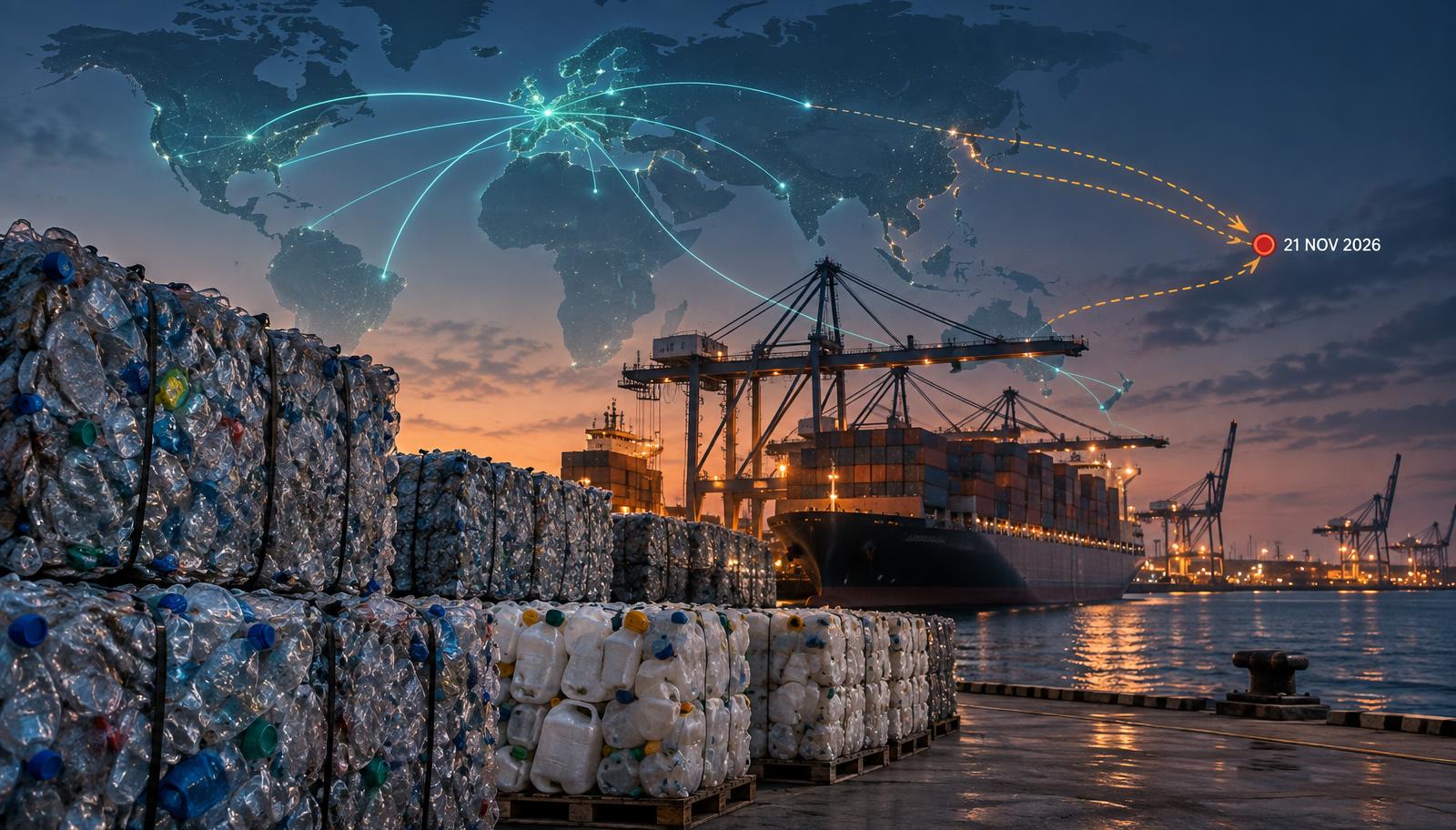
This is a European rule with international consequences. Vehicles and their components are built through global supply chains. A resin compounder in Asia, a recycler in North America or a feedstock supplier in Latin America may all be affected when an automotive customer asks for consistent material, evidence of origin and reliable quality data.
The opportunity is significant—but a recycled-content target does not automatically turn mixed plastic into automotive-grade resin. The likely winners will be suppliers that can control composition, quantify yield, document each lot and repeatedly meet a buyer’s technical specification.
What the new vehicle rules actually say
The European Commission describes the regulation as covering the vehicle lifecycle, from design and manufacturing to collection, dismantling and recycling. It enters into application on 1 September 2028, with the recycled-plastic targets following later.
| Milestone | Requirement | Commercial implication |
|---|---|---|
| 13 August 2026 | Regulation entered into force | Automotive supply chains can begin planning against a confirmed regulatory direction. |
| 1 September 2028 | Regulation enters into application | Documentation, design and recovery processes move from preparation towards implementation. |
| September 2032 | Minimum 15% recycled plastic in new vehicles | Qualified recycled resin demand should broaden, but customer specifications will still determine eligibility. |
| 2036 | Recycled-plastic target scales to 25% | Supply consistency and investment in higher-quality recovery become more commercially important. |
The Commission still has implementing work to complete, including recycled-content calculation methodologies. Suppliers should therefore distinguish between what is already fixed—the targets and timetable—and details that may be clarified through later acts or customer requirements.
Why a European target will influence global plastic markets
Automotive manufacturing rarely sits within one border. Polymers, compounds, parts and complete vehicles can cross several regions before final sale. This creates three likely effects beyond Europe.
First, international component suppliers selling into the European market will need inputs that support their customers’ compliance. A Tier supplier may pass tighter documentation and quality requirements back to its compounder, which then passes them to the recycler and feedstock supplier.
Second, global manufacturers usually prefer repeatable material platforms. Where technically and commercially practical, a resin formulation qualified for one major market may influence purchasing in other plants or vehicle programmes.
Third, the regulation can encourage investment in separation and recovery. The Commission explicitly links the rules with higher-quality material recovery and a more stable supply of secondary raw materials. That increases the value of reliable data about what arrives at a facility and what becomes saleable output.
This does not mean every recycled polymer will command an automotive premium. It means the market is likely to become more segmented: qualified, traceable material for demanding applications on one side, and less-controlled commodity grades on the other. Our Price Centre shows how differently each polymer, grade and market is currently reported.
Which recycled polymers could benefit?
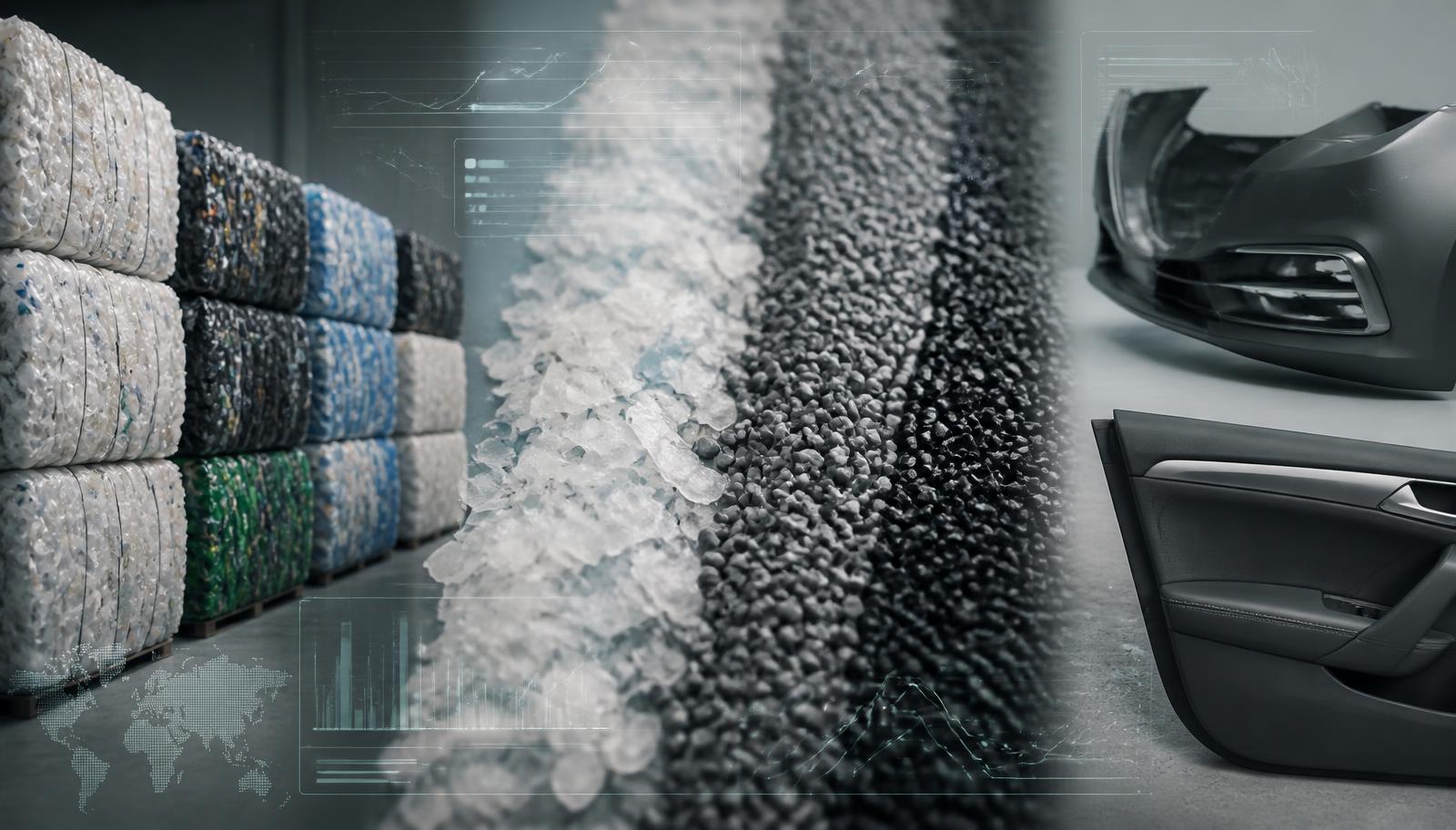
Modern vehicles contain multiple polymer families, and each application has its own performance requirements. Polypropylene is widely used across automotive components, while polyethylene, ABS, polyamides and engineered blends also serve particular functions.
For recyclers handling PP and HDPE-rich streams, the commercial question is not simply, “Is this polymer used in a car?” It is, “Can this recovered material be processed into a compound that repeatedly passes the buyer’s specification?”
That assessment can include:
- polymer and grade composition;
- colour and visual consistency;
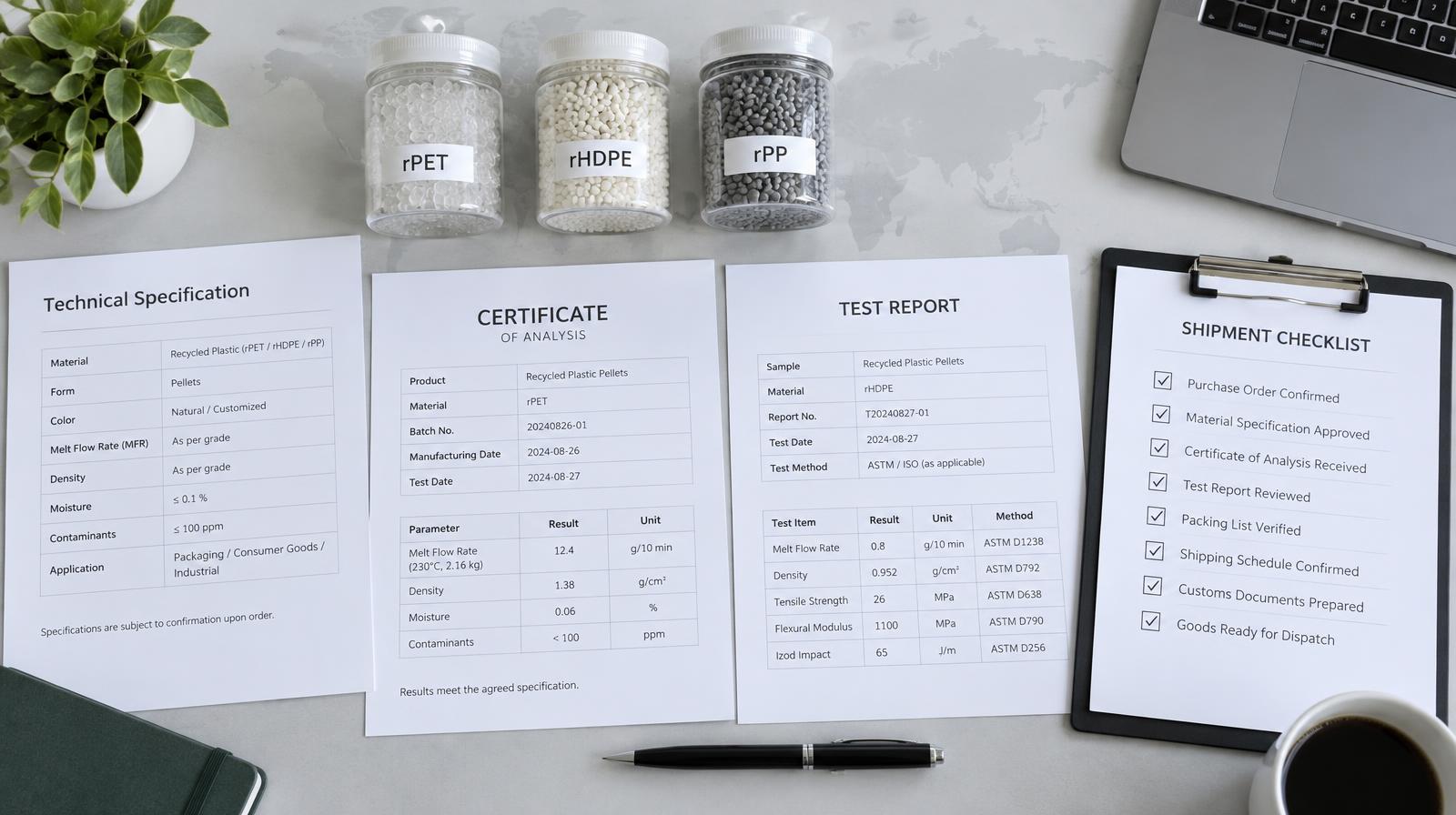
- melt-flow behaviour, density and ash content;
- moisture, odour and volatile compounds;
- mechanical properties and impact performance;
- metals, elastomers, labels and incompatible polymers;
- additive history and restricted-substance requirements; and
- lot-level origin and chain-of-custody records.
A bale photo cannot answer all of those questions. Laboratory testing, process controls and customer qualification remain essential. But better inspection at receiving can stop obvious variability from silently entering the production system. Current published observations for recycled PP and recycled HDPE show how much value sits between grades.
The price opportunity depends on quality—not the mandate alone
The recycled-polymer market remains exposed to virgin-resin economics. S&P Global’s 2026 recycled-polymers outlook highlights the influence of geopolitical volatility, legislation and substitution between virgin and recycled material. In the United States, public reporting during 2026 has also described pressure on recycled PE and PP when feedstock availability increased and lower virgin prices weakened demand.
Automotive targets may support long-term demand, but they do not remove these short-term pressures. Nor do they guarantee a premium for material that cannot meet an automotive specification.
The relevant margin calculation is therefore not just the purchase price of a bale or the selling price of a pellet. It is the cost per saleable, specification-compliant tonne:
Delivered feedstock cost + sorting + washing + conversion + testing + rejected output + disposal, divided by compliant saleable yield.
A cheaper load can be more expensive if contamination reduces throughput, raises wash losses or produces inconsistent resin. Conversely, a higher-priced feedstock can create better economics when it delivers stable yield and reduces quality failures. This is the same principle explored in our guides to bale quality and recycled-plastic prices and the virgin-versus-recycled price gap.
The operating data automotive buyers will expect
Companies do not need to wait until 2032 to improve their evidence. The most useful approach is to connect receiving information with processing and finished-product results.
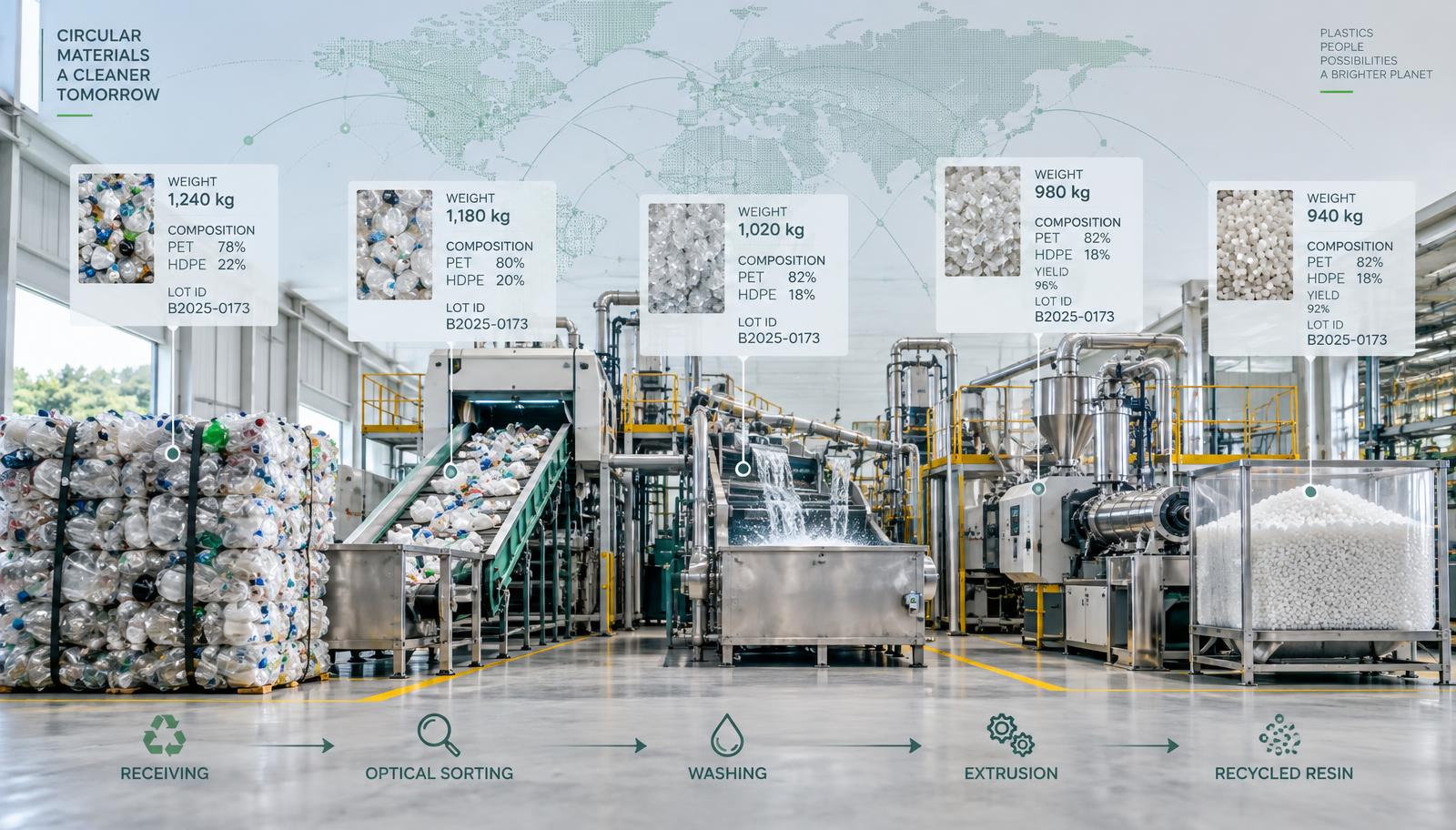
| Process stage | Record consistently | Why it matters |
|---|---|---|
| Receiving | Supplier, load ID, declared material, weight, date and images | Creates a traceable starting point for every lot. |
| Composition screening | Target polymer, colour mix and visible contamination | Flags variability before processing costs are committed. |
| Production | Throughput, wash and sorting loss, downtime and actual yield | Converts bale price into true cost per saleable tonne. |
| Quality control | Tests relevant to the application and customer specification | Demonstrates whether the output is consistent and fit for qualification. |
| Release | Batch identity, certificate data and customer acceptance | Links incoming material with the product actually sold. |
The important step is reconciliation. If an incoming load appears clean but delivers poor yield, investigate why. If one supplier’s loads repeatedly create excess residue or variable melt flow, make that visible in the supplier scorecard. If a processing change improves saleable yield, preserve the evidence rather than relying on anecdote.
Six practical actions for recyclers and feedstock suppliers
1. Separate streams by their commercial destination
Avoid treating every PP or HDPE-rich load as interchangeable. Build specifications around the end market, then protect the streams most likely to meet demanding applications.
2. Create a repeatable receiving standard
Use the same inspection fields, photo angles, contamination categories and acceptance rules across shifts and sites. Consistency is more valuable than an occasional detailed inspection. Our scanning guide sets out repeatable photo standards.
3. Measure actual yield by supplier and load type
Purchase price without yield can hide the true cost of material. Connect receiving records with saleable output, waste and rework.
4. Start traceability before a customer demands it
Keep lot identifiers intact through receiving, processing, testing and release. Reconstructing chain-of-custody data after production is slower and less credible.
5. Engage compounders and automotive suppliers early
Ask which properties and documentation will govern qualification. A technically impressive recycling process is not enough if it targets the wrong specification.
6. Treat supplier development as a margin programme
Share clear, objective feedback about contamination and composition. The aim is not merely to reject poor loads; it is to improve future loads and expand the volume of usable feedstock.
Use the Waste Bale Audit contamination-cost calculator to test how contamination, disposal cost and yield can change the economics of a load.
Where BaleScan fits—and where it does not
BaleScan helps teams create a more consistent digital record at the point of receiving. A user photographs a plastic bale, records the load context and generates an AI-assisted estimate of visible composition and contamination that can be shared in a report.
That can support faster screening, supplier conversations and the comparison of receiving observations with downstream yield. It is particularly useful when the alternative is an undocumented visual judgement that varies by operator.
BaleScan does not certify automotive grade, prove recycled content, replace laboratory testing or guarantee regulatory compliance. It should sit inside a broader quality system that includes calibrated equipment, sampling, material testing, mass-balance controls and customer approval.
The commercial value is straightforward: better evidence earlier in the process can help a recycler decide where to direct a load, identify recurring contamination and build the data discipline that higher-value supply chains require.
See how BaleScan works and start turning bale inspections into comparable records.
The bottom line
Europe’s 15% and 25% targets create a clear demand signal for recycled plastic in vehicles. Their global impact will travel through component, compound and raw-material supply chains.
But the target alone will not make material valuable. Automotive customers buy performance, consistency and evidence. Recyclers and feedstock suppliers that begin measuring composition, yield, contamination and traceability now will be better positioned when qualification activity accelerates.
The countdown to 2032 is long enough to improve a process—and short enough that the work should already be starting.
Frequently asked questions
What are Europe’s recycled-plastic targets for new vehicles?
The regulation sets a mandatory minimum of 15% recycled plastic from 2032, scaling to 25% from 2036. The European Commission says the regulation enters into application on 1 September 2028.
Do the rules matter to suppliers outside Europe?
Yes, when their resin, compounds or components enter vehicles placed on the European market. Global automotive supply chains can pass technical and documentation requirements through several supplier tiers.
Which recycled plastics can be used in vehicles?
Vehicles use PP, PE, ABS, polyamides and other polymers and blends. Suitability depends on the component specification, processing history, additives, contamination and verified performance—not the polymer name alone.
Can mixed-plastic bales become automotive-grade resin?
Potentially, but only through suitable separation, processing, compounding, testing and customer qualification. Highly variable or incompatible inputs can reduce yield and make consistent performance difficult.
Will the targets automatically increase recycled-plastic prices?
No. They should strengthen long-term demand for qualifying material, but price will still depend on region, polymer, form, specification, virgin-resin competition, supply and contract terms. Traceable, consistent grades may perform differently from commodity material.
Does BaleScan certify automotive recycled content?
No. BaleScan provides AI-assisted visual screening and documentation of plastic bales. It does not replace laboratory analysis, mass-balance accounting, third-party certification or customer qualification.
Sources
- European Commission: New rules for a more circular European automotive sector, 12 August 2026
- European Commission: End-of-Life Vehicles—status, scope and implementation timeline
- S&P Global Energy: Recycled polymers in 2026
- PlasticsToday: Recycled PE and PP market pressure in 2026