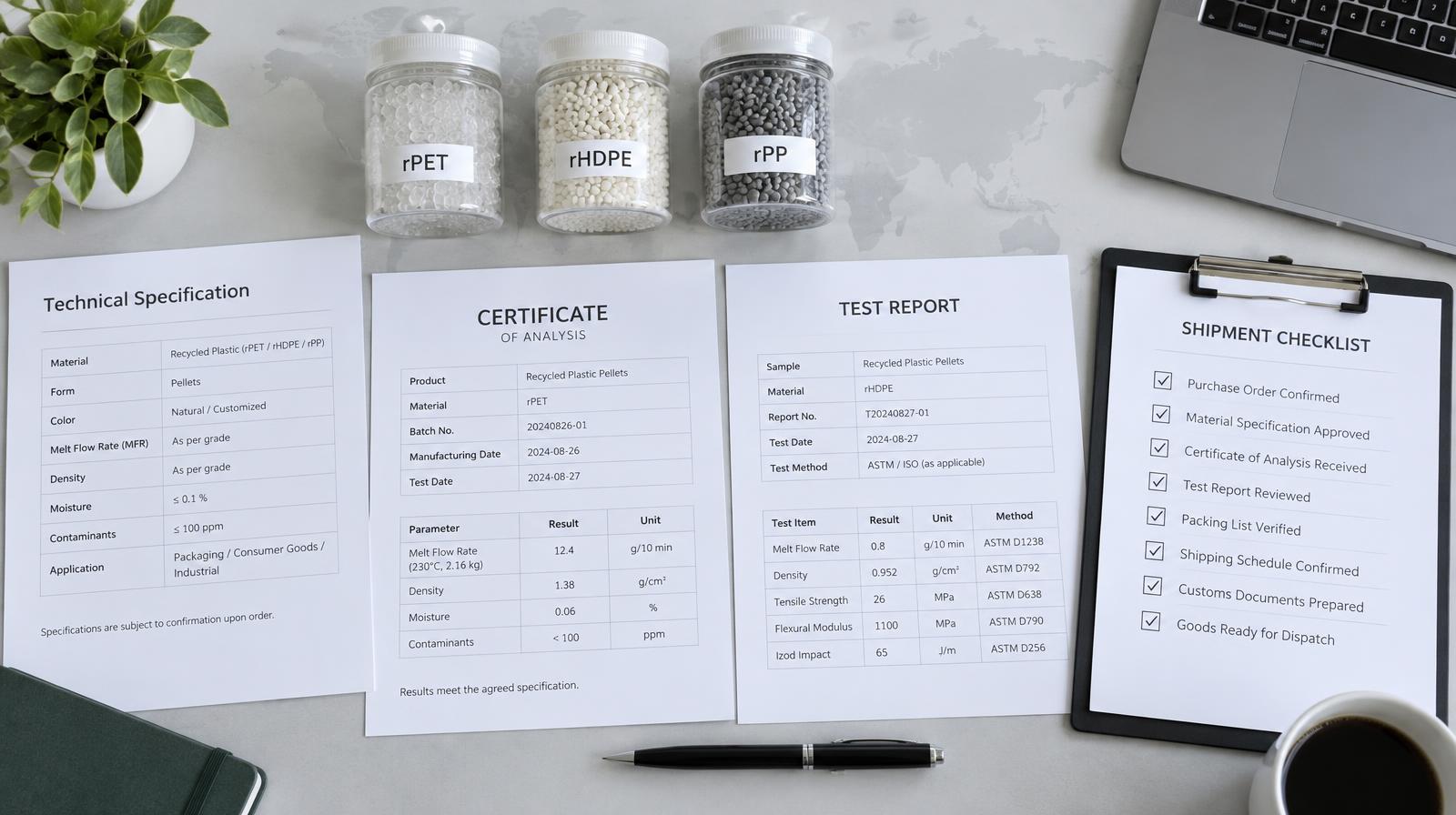
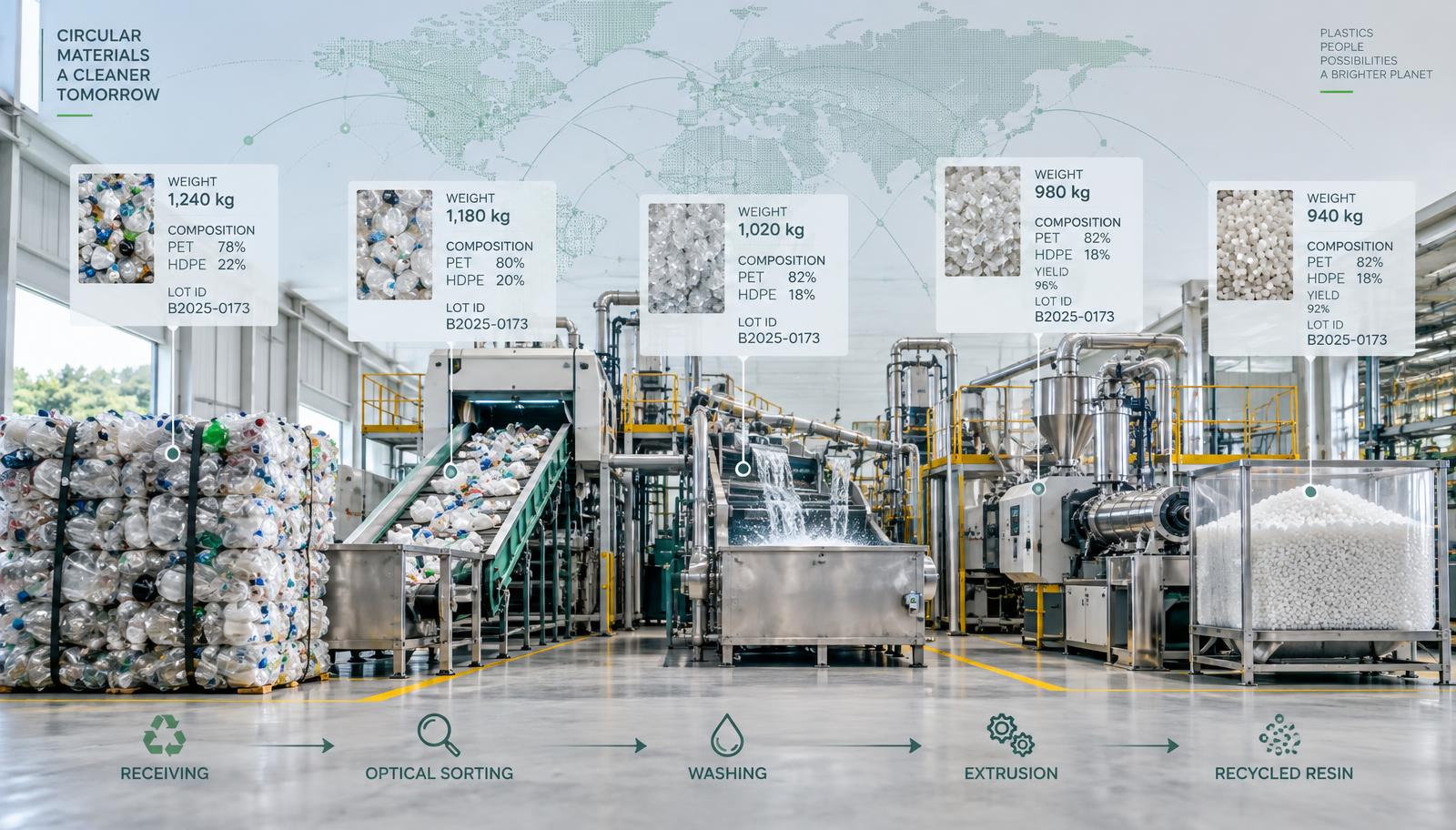
Two HDPE bales can leave the same facility on the same day and be worth very different money. One is baled natural milk bottle, destined for food-contact rHDPE pellet. The other is mixed coloured rigid, headed for pipe, crates or lumber. The polymer is the same. The price is not, and in 2026 that gap is the most reliable margin opportunity available to a materials recovery facility.
S&P Global Commodity Insights publishes separate Platts recycled HDPE assessments for Europe, Asia and the US, and ICIS runs its own recycled polyolefin coverage. All of them split natural from coloured for a reason. This article explains what drives that spread, why rigid polyolefin recycling has been described as plateauing across Europe, and how a disciplined bale audit captures value that sorting alone leaves on the table.
Key Takeaways
- Natural HDPE bales price above mixed coloured because they feed food-contact and high-visibility packaging applications.
- European rigid HDPE and PP recycling output has plateaued, while recycled content obligations keep rising.
- Colour bleed, PP intrusion and non-food HDPE are the three most common causes of a natural bale being downgraded.
- In Australia and similar markets, natural HDPE is dominated by milk and food packaging, which sets the sorting rule for the line.
- Documented composition per bale is what converts a good sort into a premium invoice.
How the rHDPE Market Is Assessed
Price reporting agencies do not quote one rHDPE number. Platts European recycled HDPE assessments and their Asian equivalents distinguish grade, colour and form — baled feedstock, flake and pellet — because each sits at a different point in the value chain and clears into a different end market.
If you are negotiating an offtake, the assessment you reference defines your risk. A bale contract linked to a pellet index transfers processing economics you do not control onto your invoice. A bale contract linked to a bale assessment, with a clear contamination specification, keeps the argument where it belongs: on the quality of what you actually loaded.
Regional Markets Behave Differently
European rHDPE has spent 2026 under pressure from cheap virgin polyethylene and imported recyclate. Asian assessments have been driven more by energy and freight. Australian and North American natural HDPE has its own dynamic, anchored to domestic dairy and household chemical packaging demand. Do not assume a European headline applies to your gate.
What Drives the Natural Versus Coloured Spread
Natural HDPE is uncoloured, translucent material — milk bottles, some juice and water containers, certain food packaging. Because it carries no pigment, it can be washed and pelletised into a light-coloured resin that a brand owner can tint or leave clear. That optionality is what buyers pay for.
Coloured HDPE cannot be un-coloured. Once pigment is in the stream, the output is a grey or dark pellet suitable for pipe, crates, drums, garden furniture and lumber. Those are perfectly good markets, but they compete directly with cheap virgin polyethylene and they do not carry a food-contact premium.
Food-Contact Eligibility Is the Real Premium
The step change in value happens when a natural bale is clean enough to feed a food-grade rHDPE line. That requires provenance as well as purity: the bale needs to be predominantly food and beverage packaging, not household chemical bottles that happen to be uncoloured. A bale audit that identifies natural HDPE without distinguishing likely food packaging from detergent and motor-oil containers is not giving the buyer the information they need.
Why Local Packaging Norms Matter
Sorting rules are geographic. In Australia, for example, natural HDPE bottles in kerbside streams are overwhelmingly milk and food packaging, so a natural HDPE fraction can reasonably be treated as food-grade candidate material. In markets where uncoloured detergent bottles are common, that assumption breaks. Any AI or manual audit should be calibrated to the packaging reality of the region it operates in.
The Rigid Polyolefin Supply Problem
Plastics Recyclers Europe has warned that a plateau in rigid HDPE and PP recycling puts the region''s 2030 recycled-content targets at risk, pointing to rising recyclate imports, questionable recycled-content claims and weak verification as contributing factors. Industry analysis of that plateau makes uncomfortable reading for anyone assuming demand alone will lift prices.
The structural takeaway is that volume growth is not coming quickly, so competitive advantage moves to quality and traceability. A recycler who can prove what is in a bale is positioned for the compliance-driven demand. A recycler who cannot is selling into the commodity tier where imports set the price.
Verification Is Becoming a Commercial Requirement
As buyers face their own recycled-content reporting obligations, they push documentation demands upstream. Increasingly the question is not just "how clean is this bale" but "can you show me". Facilities with a scan history answer in seconds. Facilities without one answer with a promise.
Three Contaminants That Downgrade a Natural Bale
Most natural HDPE downgrades come from the same short list. Knowing them turns a general instruction to "sort better" into a specific instruction the line can act on.
1. Light Colour Bleed
Pale blue, pale green and opaque white bottles read as natural at speed on a moving belt. They are not. Even a small proportion shifts the pellet colour and costs the buyer their light-resin claim. This is the single most common cause of a natural bale being repriced as coloured.
2. Polypropylene Intrusion
PP tubs, caps and containers ride through natural HDPE sorting easily because they look similar in profile. PP has a different melt behaviour and different density, and above a low threshold it degrades the extrusion. Caps are the usual culprit and the easiest to quantify from a clear bale photograph.
3. Non-Food Natural HDPE
Uncoloured detergent, cleaning and lubricant bottles are technically natural HDPE but carry chemical residue history that disqualifies them from food-grade streams. In regions where these are prevalent, they must be counted separately or the bale''s food-grade claim is unsupportable.
Building a Natural HDPE Quality Programme
The mechanics are simple; the discipline is the hard part. A workable programme has four parts and takes minutes per shift, not hours.
Scan Every Outbound Natural Bale
Natural HDPE is your highest-value polyolefin bale. It deserves a composition record on every single load. A photo-based audit produces a timestamped breakdown of natural HDPE, coloured HDPE, PP and other, without stopping the line or breaking the bale.
Sample Inbound by Supplier
Contamination is usually inherited, not created. Scanning inbound loads by supplier reveals which source is diluting your natural fraction, and gives you the documented basis to adjust that gate rate or tighten the specification.
Feed Results Back to the Sort Line Weekly
A number that reaches the picking cabin within a week changes behaviour. A number that appears in a quarterly report does not. Post the natural-bale purity trend where the pickers can see it.
Attach the Report to the Sale
Sending a composition report with the dispatch documents pre-empts most claims. It also, over time, builds the reputation that gets your tonnes bought first when buyers are being selective. Our scan quality guide covers how to photograph a bale so the analysis is reliable enough to send to a customer.
Capture the Spread You Are Already Sorting For
Your line is already doing the hard work of separating natural from coloured HDPE. Without documentation, that effort is invisible at the point of sale — and invisible effort gets paid at the commodity rate.
Audit your natural HDPE bales and make the quality you produce visible in the price you receive.
Frequently Asked Questions
Why is natural HDPE worth more than coloured HDPE?
Natural HDPE contains no pigment, so it can be processed into a light resin that a brand owner can colour as needed, including for food-contact packaging. Coloured HDPE can only produce dark resin for pipe, crates and lumber, which competes directly with inexpensive virgin polyethylene and carries no food-grade premium.
How much polypropylene can a natural HDPE bale tolerate?
Thresholds vary by buyer, but PP is treated as a processing risk because of its different melt and density behaviour, and caps are the most common source. Any offtake contract with a food-grade claim will specify a limit, so the practical answer is to measure PP separately on every bale rather than assume it is negligible.
Are all natural HDPE bottles suitable for food-grade recycling?
No. Uncoloured detergent, cleaning and lubricant bottles are natural HDPE but carry a chemical residue history that disqualifies them from food-contact streams. In markets where natural HDPE is dominated by milk and food packaging, the food-grade assumption is reasonable; elsewhere it must be verified.
Which price assessment covers recycled HDPE?
S&P Global Commodity Insights publishes Platts recycled HDPE assessments for Europe, Asia and the US, and ICIS runs parallel recycled polyolefin coverage. Each splits by colour, grade and form, so match your contract to the assessment that reflects the product you actually sell.
Why has rigid polyolefin recycling stalled in Europe?
Industry bodies point to imported recyclate competing on price, weak verification of recycled-content claims and rising plastic waste exports, alongside soft demand and cheap virgin resin. The result is flat output at a time when regulated recycled-content demand is increasing.
Can an AI photo audit distinguish natural from light-coloured HDPE?
A good one can, provided the photograph is well lit and in focus, because the distinction is largely a visual one at the bale surface. Poor lighting is the main cause of pale blue and opaque white being misread as natural, which is why image quality guidance matters as much as the model.
How often should we audit inbound supplier loads?
Sampling regularly is enough for inbound, provided the sample is consistent and recorded. The value comes from the trend across weeks, which identifies the specific supplier degrading your natural fraction and supports a documented commercial conversation.
Does a composition report actually prevent buyer claims?
It prevents the disputable ones. When a timestamped report accompanies dispatch, a buyer raising a claim has to argue against a record created before the load left your yard, rather than against a verbal assurance. Most marginal claims disappear at that point.