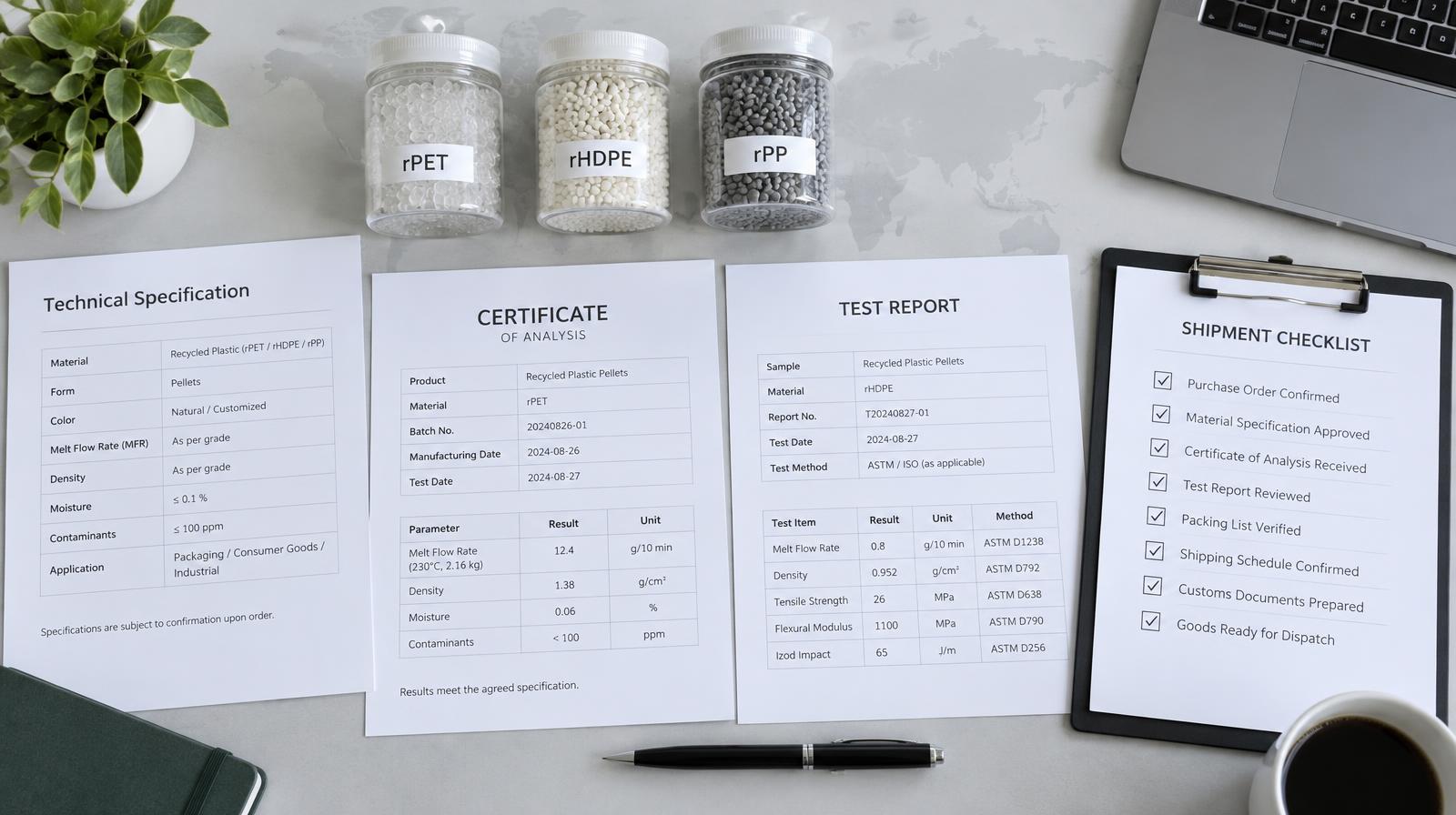
Most bale sellers have signed a contract linked to a published price assessment without fully understanding what that assessment measures. Then a settlement arrives that does not match expectations, and the discussion turns into an argument about basis, timing and grade. It is a costly education.
ICIS, S&P Global Commodity Insights (Platts) and OPIS all publish recycled plastics assessments, and each is precise about what it covers: which polymer, which grade, which colour, which form, which region, which delivery terms and which frequency. This guide translates that structure into the questions a recycler should ask before signing anything indexed to a published number.
Key Takeaways
- An assessment is defined by polymer, grade, colour, form, region, delivery basis and frequency — change any one and the number changes.
- Bale, flake and pellet assessments sit at different points in the chain and should not be substituted for each other.
- Delivery basis (FD, ex-works, DEL) silently moves freight cost between buyer and seller.
- Weekly and monthly assessments behave differently in a volatile market; pick the one that matches your cash cycle.
- An index sets the reference; your own composition data determines whether you get the reference price or a discount.
What a Price Assessment Actually Is
A price assessment is a reporting agency''s judgement of the tradeable value of a tightly specified product, at a specified location, on a specified day, based on reported transactions, bids, offers and market intelligence. It is not an average of everything sold. It is a value for one narrow specification.
Agencies publish their methodologies openly. The ICIS recycled PET report documents exactly which grades are quoted in Europe, Asia and the US and on what basis, and Platts publishes its recycled HDPE methodology in the same way. If you are indexed to a number, read the methodology behind it once, properly.
Why Two Agencies Can Disagree
Different methodologies, different specification definitions, different assessment windows and different contributor pools produce different numbers for what sounds like the same product. Neither is wrong. Your contract simply has to name one.
The Seven Variables That Define Any Quote
Before agreeing an index-linked price, confirm all seven of these in writing. Ambiguity in any one is where money leaks.
1. Polymer and 2. Grade
rPET, rHDPE, rPP, rLDPE — and within each, the grade: food-grade, bottle-grade, general purpose. A food-grade quote applied to a non-food-eligible bale is a mismatch waiting to be repriced.
3. Colour
Colourless, mixed coloured, natural, jazz. In both PET and HDPE this is often the single largest driver of value, and it is the variable most likely to be assumed rather than stated.
4. Form
Bale, flake or pellet. Each step adds processing cost and yield loss, so the spread between them is not margin — it is work.
5. Region
Northwest Europe, Southern Europe, Eastern Europe, UK, Germany, US, and specific Asian markets are all assessed separately because they clear at different levels. Regional spreads can be wide and persistent.
6. Delivery Basis
FD (free delivered), ex-works and DEL each place freight and risk differently. Agreeing an ex-works number and delivering to the customer''s plant means you have absorbed the difference.
7. Frequency
Weekly spot assessments react quickly; monthly contract assessments smooth volatility. In a falling market a monthly reference protects the seller; in a rising one it protects the buyer.
Bale Versus Flake Versus Pellet
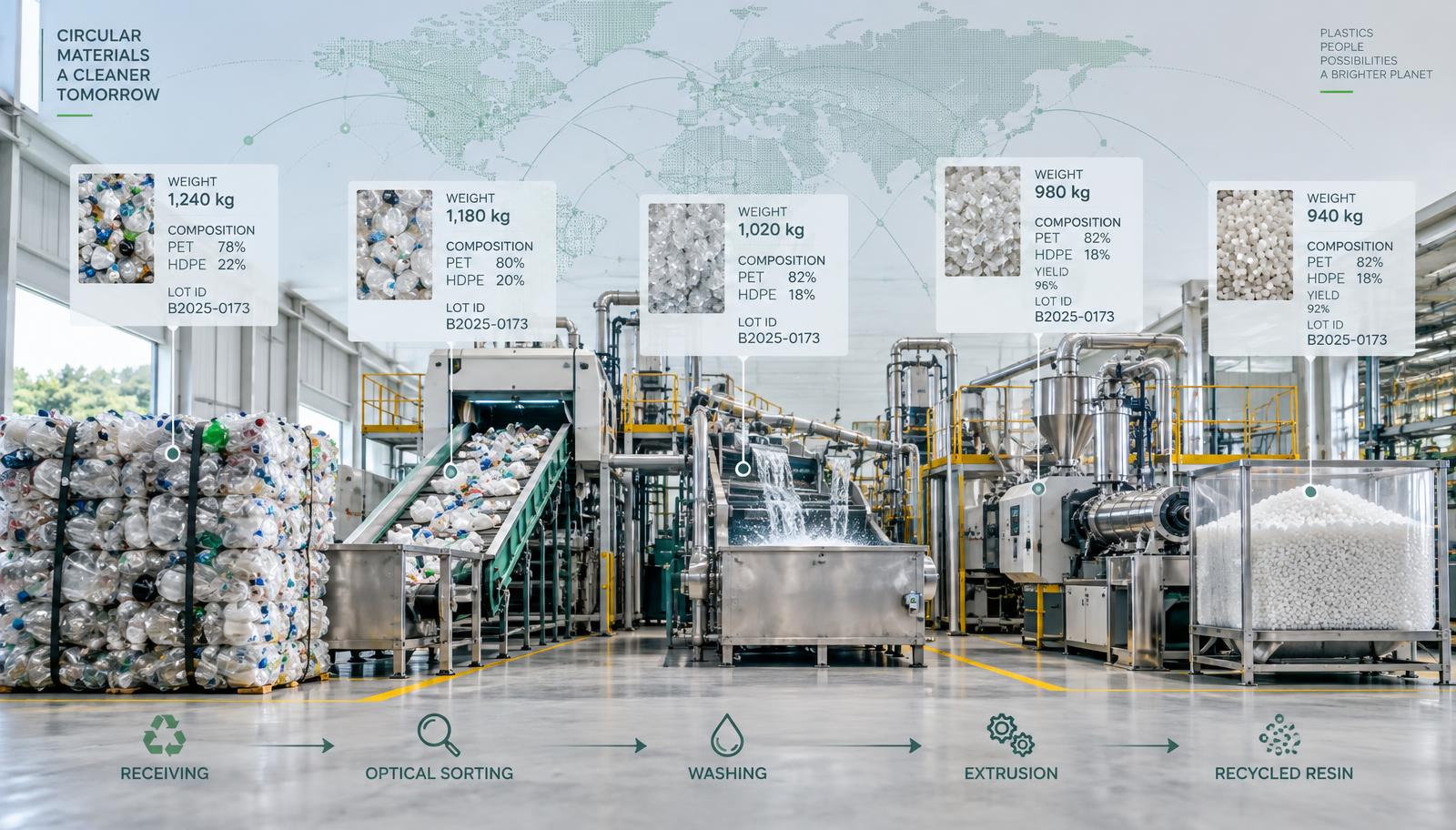
This is the most consequential distinction for a MRF. Bales are unprocessed feedstock. Flake has been sorted, washed and ground. Pellet has been extruded and is a finished resin ready for a converter.
The gap between a bale price and a pellet price covers sorting losses, wash-line yield, energy, labour, effluent treatment, quality control and margin. When a bale contract is indexed to pellet minus a fixed conversion allowance, every increase in real processing cost erodes the recycler''s share — and contamination in your bale increases the buyer''s processing cost directly.
Yield Is the Hidden Term
A buyer paying for a tonne of bale is really buying an expected tonne of output. A bale at 92% target purity delivers materially less than one at 98%, and buyers price that expectation whether or not the contract mentions it. Knowing your true composition tells you whether the deal in front of you is generous or punitive.
Common Contract Traps
Four patterns account for most disappointing settlements.
Indexing to the Wrong Form
Selling bales against a flake or pellet index hands the counterparty control of your realised margin. Index to the form you actually ship.
Undefined Quality Specification
An index price with no stated contamination limit invites a discretionary deduction. Define the target purity, the measurement method and the tolerance, and state who bears the cost outside it.
No Agreed Verification Method
If the contract does not say how composition is determined, the buyer''s assessment becomes the default. Agreeing a method up front — including a pre-dispatch composition record — is far cheaper than arbitration.
Stale Reference Windows
Settling a delivery made in a fast-moving week against a prior-month average can be worth a lot, in either direction. Match the window to the shipment.
Pairing an Index With Your Own Quality Data
An index tells you what the market pays for a defined specification. It says nothing about whether your bale meets it. Only your own measurement closes that loop, and doing it before dispatch is what makes it useful.
Facilities that keep a per-load composition record can do three things others cannot: verify their bales against the specification they are indexed to, demonstrate compliance when a deduction is proposed, and see whether their average quality is trending toward or away from the premium grade.
Build a Simple Two-Line Dashboard
Track the reference assessment for your grade and your own average outbound purity on the same chart. When your purity trend falls while the index holds, the problem is upstream of you. When both fall together, it is the market. Our rPET and rHDPE pricing tracker gives you the market line; your scan history gives you the other one.
Bring Data to the Renewal
Contract renewals are decided on evidence. A supplier who can present twelve months of consistent composition reports is negotiating from a different position than one presenting assurances.
Know the Number You Are Signing
Published assessments are excellent tools when the specification behind them matches what leaves your yard. The failure mode is always the same: an index for one product applied to another, with quality undefined.
Document what is actually in your bales so that every index-linked settlement starts from facts rather than assumptions.
Frequently Asked Questions
What is a price assessment in recycled plastics?
It is a reporting agency''s judgement of the tradeable value of one tightly specified product at a specified location and time, based on reported deals, bids, offers and market intelligence. It is not an average of all sales, which is why the specification behind it matters so much.
Why do ICIS, Platts and OPIS quote different numbers?
Each uses its own methodology, specification definitions, assessment window and contributor base. Differences are expected and legitimate, so a contract should name a single agency, publication and quote rather than referring vaguely to market price.
Should a bale contract be indexed to a pellet price?
Generally no. The gap between bale and pellet reflects sorting, washing, energy, labour and yield loss that the processor controls, not the bale seller. Indexing bales to pellet transfers processing economics you cannot influence onto your settlement.
What does delivery basis change in practice?
It determines who pays freight and carries risk. Ex-works, FD and DEL prices for the same material differ by the logistics cost between those points, so agreeing one basis and shipping on another silently shifts money between the parties.
Weekly or monthly reference — which is better for a seller?
It depends on direction and cash cycle. Monthly averages smooth volatility and tend to protect the seller in a falling market, while weekly spot references capture upside faster in a rising one. Choose deliberately rather than by default.
How should contamination be handled in an index-linked contract?
Define the target purity, the tolerance, the measurement method and the consequence of exceeding it. Contracts that reference a price but not a quality standard leave the deduction entirely to the buyer''s discretion.
Can I use my own scan data as the contractual verification method?
Many buyers will accept a timestamped pre-dispatch composition report as the primary record, with a defined process for challenge. It is worth proposing, because a mutually agreed method prevents most disputes from escalating.
Do I need a paid subscription to follow these markets?
Full assessments are subscription products, and their methodologies are published openly. For a directional view without a subscription, our pricing tracker follows rPET, rHDPE and virgin comparators and is updated weekly.